How to Choose a Refrigerator: A Practical Buying Guide
By The Shopi Team · 8 min read
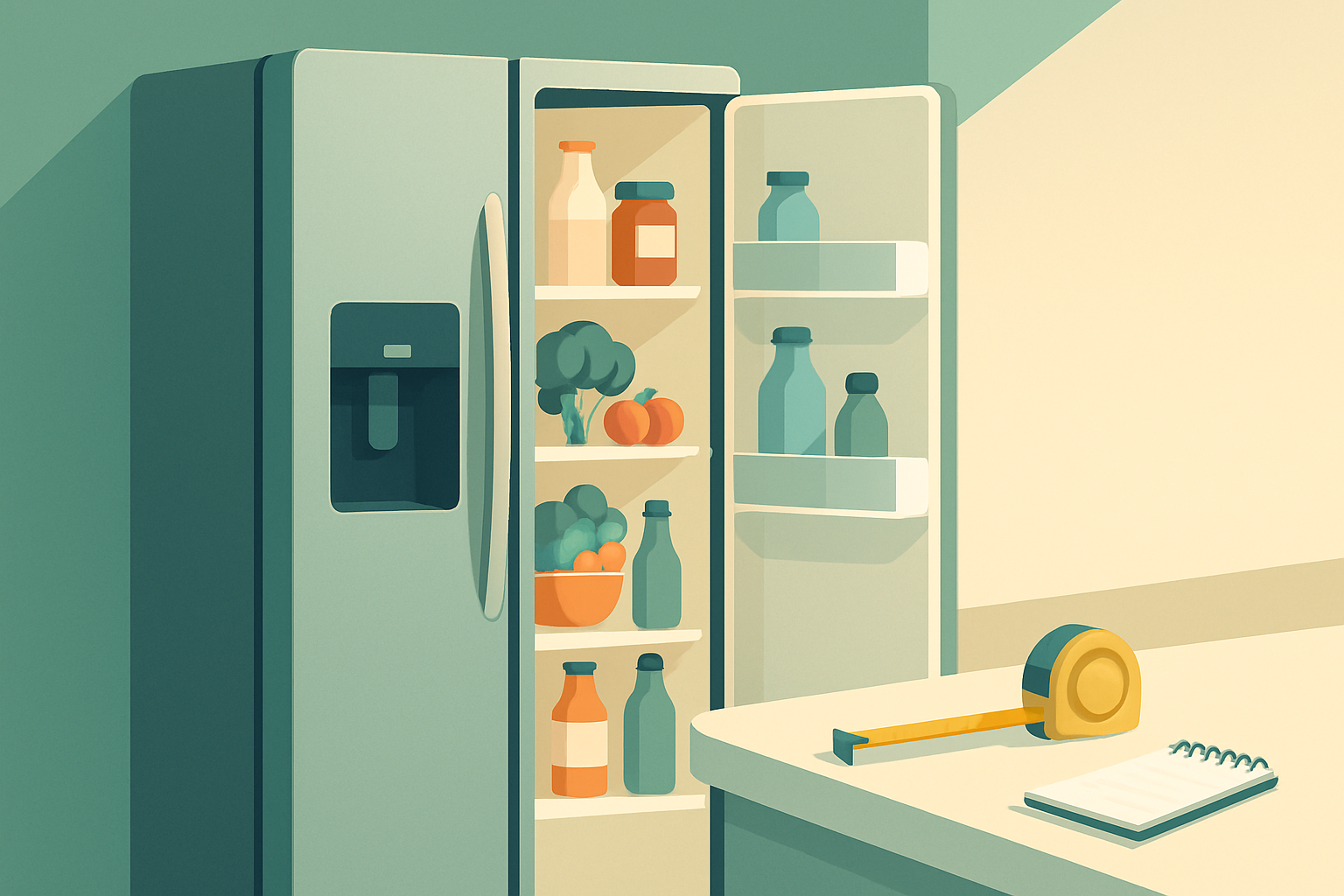
A refrigerator is one of the few appliances that runs every hour of every day for ten years or more, and it's also one of the most expensive things in your kitchen — so it deserves more thought than a showroom glance at shiny doors. The trick to figuring out how to choose a refrigerator is to resist starting with features. The fridge with the touchscreen and the dual ice makers might be genuinely great, or it might be a great fridge for a kitchen that isn't yours. The better starting question is: what will fit my space, hold what I actually buy, and keep working without drama? Answer those, and most of the dazzling options sort themselves out. Let's build that framework from the ground up.
Start with the space, not the spec sheet
Before you fall for any model, get a tape measure. Refrigerator shopping goes wrong more often from a measurement than a feature, and a fridge that doesn't fit is an expensive return.
Measure the opening it has to live in — width, height, and depth — and then account for the things people forget:
- Ventilation clearance. Fridges shed heat and need a little breathing room on the sides, top, and back. A unit crammed flush into a tight cabinet runs hotter, works harder, and ages faster.
- Door swing and drawer pull-out. A door that can't fully open, or a freezer drawer that hits an island, makes the crispers and bins maddening to use. Check the arc, not just the box.
- The path into your home. Measure doorways, hallway turns, and stair landings between the delivery truck and the kitchen. A fridge that fits the cavity but not the front door is a classic, avoidable heartbreak.
- Hinge side and how the door opens. Make sure the door opens away from a wall or counter that would block it. Some models let you reverse the hinge; many don't.
Tape out the footprint on your floor and the depth against your counters before you commit. It's the least glamorous step and the one that saves the most grief.
Pick the configuration that matches how you live
The single biggest decision is the layout, because it shapes how you'll reach for food every day for years. Each style trades cost, space efficiency, and convenience differently. Here's the honest rundown:
- Top-freezer. The classic box: freezer up top, fridge below. Usually the most affordable and among the most space- and energy-efficient for the storage you get. The trade-off is bending to reach fridge contents and narrower overall shelves. Great value if frills aren't the point.
- Bottom-freezer. Flips the layout so the fridge — the part you open most — sits at eye level, with a freezer drawer below. More comfortable daily access; you stoop for frozen goods instead.
- Side-by-side. A vertical split with the fridge on one side and freezer on the other, both running floor to top. The narrow doors swing in tight spaces, and you get easy eye-level access to both fresh and frozen. The catch: each side is narrow, so wide items like a sheet pan or a party platter can be a squeeze.
- French door. Two doors over a fridge compartment up top, freezer drawer beneath. Popular for wide, shallow shelves that fit platters easily and for opening only half the fridge at a time. Tends to cost more and packs in more features (and more parts that can fail).
- Built-in / panel-ready. Designed to sit flush with cabinetry, often accepting custom door panels for a seamless look. This is the premium, design-driven end — beautiful and integrated, but pricier to buy and to service.
There's no "best" layout, only the best fit for your kitchen and habits. A tight galley kitchen may love a side-by-side's narrow swing; a household that buys big platters and bags of produce may prefer French-door width.
Counter-depth vs. standard depth
Worth understanding before you shop: standard-depth fridges hold more but stick out noticeably past your counters. Counter-depth models sit nearly flush for a sleeker, less bulky look — at the cost of some interior volume, often for a higher price. If a clean sightline matters to you, counter-depth is worth it; if raw capacity per dollar matters more, standard depth wins.
Size it to how you shop, not the showroom
Capacity is measured in cubic feet, and bigger is the easy thing to oversell yourself on. But an oversized fridge that runs half-empty wastes energy and money for a decade, while a too-small one leaves you cramming and losing track of food.
Think about your real patterns rather than a number:
- How many people, and how do they eat? A couple who eats out often needs far less than a family that cooks in bulk.
- Fresh vs. frozen balance. A baker or batch-cooker who freezes a lot has different needs than someone who buys fresh every few days.
- How you shop. Big monthly Costco runs demand more headroom than frequent small trips. Be honest about which you actually do.
Also note that total cubic feet isn't the same as usable space. Door bins, the icemaker housing, fixed shelves, and awkward corners all eat into it. When you compare models, picture where the gallon jugs, the tall bottles, and the leftovers actually go — usable layout beats a bigger headline number.
The features that earn their keep (and the ones that don't)
Once size and layout are settled, features are where budgets balloon. Some genuinely improve daily life; others mostly add cost and things that can break. Judge each against how you'll actually use it.
Generally worth it for many people:
- Adjustable, spill-proof shelves. Flexible shelving adapts to a stockpot one week and tall bottles the next. This quietly matters more than flashier features.
- Humidity-controlled crisper drawers. Separate zones for leafy greens vs. fruit help produce last longer — a small thing that pays off weekly.
- A frost-free freezer. Automatic defrost spares you the old chore of manually melting ice buildup. Near-universal now, but confirm it.
- Good temperature consistency. The core job of a fridge. Even, stable cooling — and a freezer that recovers quickly after the door's been open — protects your food better than any gadget.
Nice for some, skippable for others:
- Through-the-door water and ice dispensers. Convenient, but they require a water line, take up interior space, and are among the more common failure points. If you don't use a lot of ice, an internal icemaker or even trays may serve you better and break less.
- Dual / independent cooling zones. Separate systems for fridge and freezer can hold humidity and odors better. A real benefit for some, a premium for others.
- Convertible drawers. Compartments that switch between fridge and freezer add flexibility if your needs swing seasonally.
- Smart screens, cameras, and apps. A camera that lets you peek inside from the store can be handy, but treat connected features as a bonus, not a reason to buy. Every screen and sensor is another component that can fail and date the appliance long before its cooling does.
A steady principle: each added mechanism — dispenser, second icemaker, touchscreen — is one more part that can need service. Buy the convenience you'll genuinely use, and don't pay for the ones you won't.
Energy use is a price tag you pay for a decade
Because a fridge never switches off, its efficiency is a recurring cost baked into your bill for the life of the appliance — a small daily difference compounds over ten-plus years. Look for an ENERGY STAR certification and read the energy guide label to compare estimated annual operating cost between models.
Two practical notes. First, efficiency and size interact: a right-sized fridge usually beats an oversized one you keep half-full. Second, dispensers, large ice systems, and through-door features can nudge consumption up. Weigh the running cost alongside the sticker price rather than treating them separately.
Common pitfalls and smart questions to ask
A handful of traps catch first-time buyers, and a few pointed questions cut straight through them:
- Don't skip the depth and clearance check. Width is the obvious one; depth, door swing, and ventilation gaps are where fits go wrong. Measure all of it.
- Don't oversize by default. A bigger box feels safer in the store and runs half-empty (and less efficiently) at home. Match it to how you shop.
- Don't pay for the showroom dazzle. Bright lighting and a wall of doors flatter every model. The finish that looks pristine under spotlights may show every fingerprint in your kitchen — consider fingerprint-resistant finishes if that bugs you.
- Ask: what's the usable interior layout, not just total cubic feet? Picture where your real groceries land.
- Ask: how does it handle noise? In an open-plan kitchen, a hum or icemaker clatter you'd never notice in a store can grate at home.
- Ask: what commonly needs service, and how long is the warranty? Icemakers, dispensers, and electronics tend to fail before the compressor does. Favor detailed, specific owner reviews over a glowing star average, and check more than one independent source before you commit.
How Shopi helps you choose
Here's the part most guides skip. Once you know your space, your layout, and the features you'll truly use, the hard part isn't the decision — it's the noise. Many "best refrigerator" roundups are ranked partly by affiliate commission: the site earns a cut when you buy through its link, which can quietly nudge certain models up the list. That doesn't make them worthless, but it's an incentive worth reading around. Our guides on how to research a product before buying and how to compare products objectively help you score options on your criteria instead of someone else's spotlight.
When you're ready to look at real models, this is candidly why we built Shopi: an AI shopping advisor with no affiliate links, no ads, and no commissions — it earns nothing when you buy, so a model rises only because it fits you. It learns your needs, budget, and values, then explains every pick in plain language with a relevance score, and links you straight to the product's own page rather than a kickback link. You can tell it something like "counter-depth French door, fits a 36-inch cavity, family of four, under [your budget]" and see options with a clear "why this fits" for each.
You can try it free with no signup — the demo runs on a sample shopper profile, so it shows how the reasoning works rather than results tailored to you. Create a free profile (under two minutes) when you want recommendations matched to your own kitchen and habits. The framework above is the real value, and it's yours whether or not you ever open the app: measure first, match the layout to how you live, size it to how you shop, and ignore anyone upselling you a feature you'll never touch.
Frequently asked questions
What's the most important first step in choosing a refrigerator?
Measuring — before any feature or finish. Check the width, height, and depth of the space it has to fit, and don't forget ventilation clearance, the door swing, the freezer drawer's pull-out, and the path through your front door and hallways to the kitchen. A fridge that's perfect on paper but doesn't fit the cavity (or won't make it through a doorway) is the most common and avoidable mistake. Tape out the footprint at home before you commit.
Which refrigerator layout is best — top-freezer, bottom-freezer, side-by-side, or French door?
There's no universal winner; the right layout depends on your kitchen and habits. Top-freezer models are typically the most affordable and space-efficient. Bottom-freezer puts the fridge at eye level for easier daily access. Side-by-side has narrow doors that suit tight kitchens and gives eye-level access to both compartments, though each side is narrow. French door offers wide, shallow shelves great for platters but usually costs more and adds more parts. Choose for how you actually reach for food, not the look.
What size refrigerator do I actually need?
Size it to how you shop and eat, not to the biggest box on the floor. An oversized fridge that runs half-empty wastes energy for a decade, while a too-small one leaves you cramming. Consider how many people you feed, your fresh-versus-frozen balance, and whether you do big bulk runs or frequent small trips. Also remember that total cubic feet isn't the same as usable space — door bins, the icemaker, and fixed shelves eat into it, so picture where your real groceries land.
Are through-the-door water and ice dispensers and smart features worth it?
It depends on how much you'll use them. Through-the-door dispensers are convenient but need a water line, take up interior space, and are among the more common failure points. Smart screens, cameras, and apps can be handy but are bonuses, not reasons to buy — each one is another component that can fail and date the appliance. A good rule: every added mechanism is one more thing to service, so pay for the conveniences you'll genuinely use and skip the rest.
How does Shopi help me choose a refrigerator differently?
Shopi is an AI shopping advisor with no affiliate links, ads, or commissions, so it earns nothing when you buy and recommends based on fit, not payouts. You describe your space, layout preference, capacity needs, and budget, and it returns options with a plain-English 'why this fits' explanation and a relevance score, linking you directly to each product's own page. You can try a free demo with no signup (it runs on a sample profile, so it isn't tailored to you), or create a free profile for personalized results.