Buying guides
How to Choose a Gas Grill: A Practical Buyer's Guide
By The Shopi Team · 7 min read
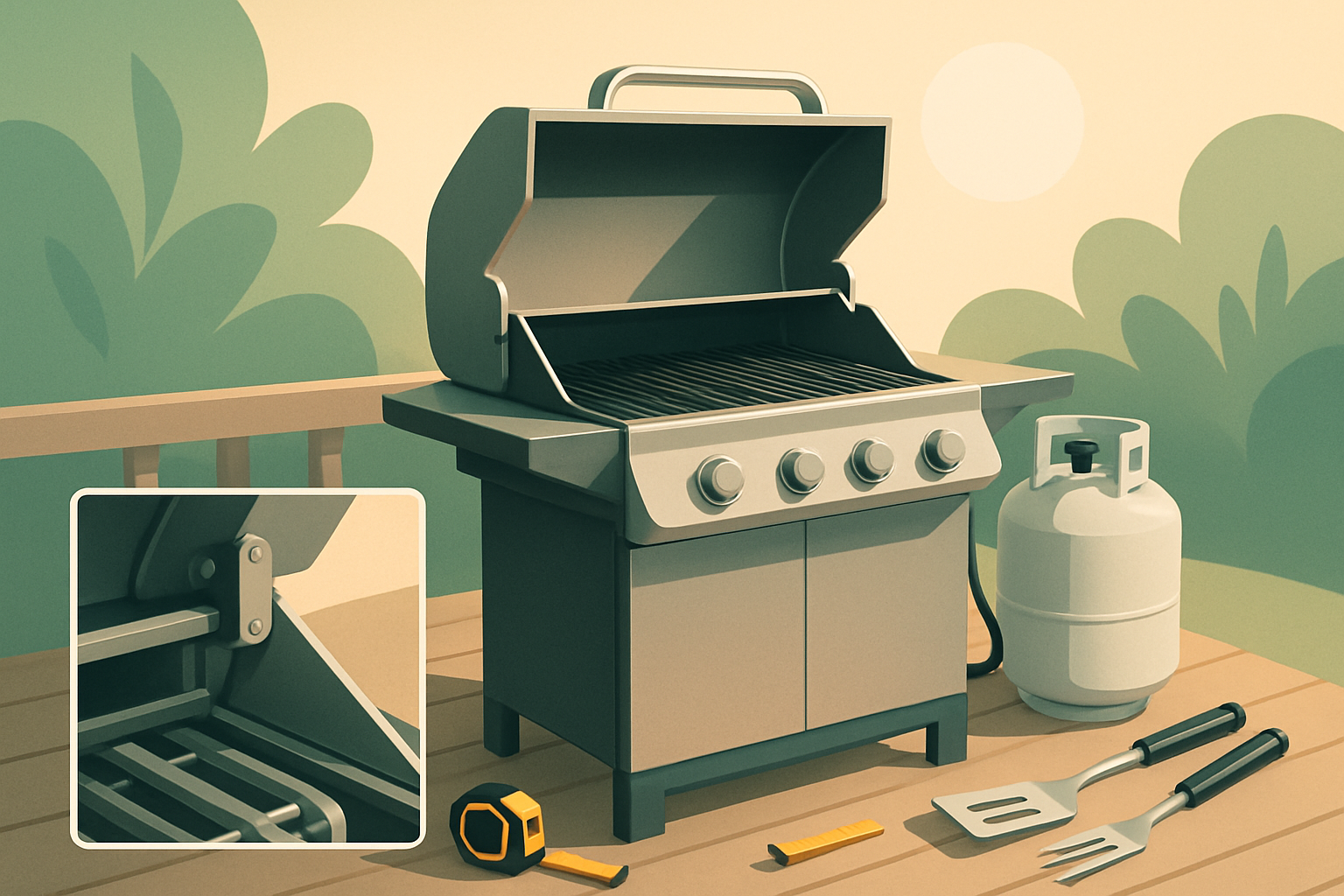
The gas grill aisle is engineered to impress: gleaming stainless lids, stickers shouting big BTU numbers, and rows of burners that all look more or less identical under the store's lights. But the real question in how to choose a gas grill isn't "which one has the most burners or the highest BTU?" It's "which one will cook the food I actually make, in the space I actually have, and still be running in five years?" Get that order right and the wall of chrome stops being intimidating. Let's build a framework that ties the marketing back to your backyard, your budget, and the way you grill.
Start with how — and where — you actually grill
Before a single spec, answer three plain questions about your situation:
- Who do you usually feed? Be honest about the 90% case — weeknight dinners for two or a family of four — not the once-a-summer cookout you tell yourself you "need" the biggest grill for.
- What do you cook? Burgers and dogs over direct high heat ask different things than low-and-slow ribs or a whole chicken (which need indirect, multi-zone heat), or steaks where a hard sear is the whole point.
- Where will it live, and how often? A covered patio used year-round and an exposed corner fired up a few weekends in summer have very different durability needs. A roll-away cart, a fixed spot near the kitchen, and a built-in outdoor kitchen are three different purchases.
Everything below maps back to these answers. The most common — and most expensive — mistake is buying the grill that wowed you in the showroom instead of the one that suits the cooking you'll genuinely do.
Pick your fuel: propane vs. natural gas
This decision shapes everything else, so make it first.
- Propane (LP). A portable tank means the grill works anywhere — patio, deck, campsite, tailgate. The trade-offs: you refill or swap tanks, and there's nothing worse than running dry halfway through dinner. Keep a spare and you're fine.
- Natural gas (NG). A line plumbed from your home means it never runs out and usually costs less per cookout. The catch is you're tethered to wherever that line is, and installing one is a real, separate cost worth pricing before you fall for a grill.
Many models come in both versions, and some are convertible — but don't assume. Check the maker's specs, and if you convert, have it done correctly. A botched fuel conversion is a safety issue, not a weekend project to improvise.
Size it for your real cookouts, not your biggest one
Cooking area is measured in square inches, with burner count as a rough proxy. As a loose guide:
- 2 burners — compact, lower fuel use, great for couples and small patios.
- 3 burners — the versatile mainstream for a family; enough room to run a two-zone fire.
- 4+ burners — for people who regularly host crowds, not occasionally.
Two cautions. First, watch the "total cooking area" figure — it often folds in a warming rack you'll rarely use, inflating the headline number over the primary grilling surface that matters. Second, bigger isn't free: a larger grill burns more fuel heating empty space, takes a bigger footprint, and is more to scrub. Measure your spot — including clearance for the lid when it's fully open — before you commit.
Decode the specs that actually matter
A handful of specs do most of the real work. Here's what each means and where people overpay.
Burners and heat zones
More burners isn't just more space — it's more independent heat zones. That's what unlocks two-zone cooking: a hot side to sear over direct flame and a cooler side to finish gently or hold food without burning it. For many cooks, that flexibility matters more than raw size.
BTUs — why bigger isn't better
BTU measures how much fuel the grill burns per hour, not how hot it gets or how evenly. A well-built grill with a heavy lid that retains heat can out-cook a higher-BTU box that leaks warmth into the air. Treat the BTU figure the way you'd treat an inflated "motion rate" on a TV — a number that's easy to make big and tempting to oversell. Look instead at heat retention, even heating across the surface, and BTU relative to the cooking area, not the headline alone.
Grate material
The grates touch your food and take the most abuse, so the material is worth understanding:
- Porcelain-enameled steel — affordable and easy to clean, but the coating can chip over time.
- Stainless steel — durable and low-maintenance, with slightly lighter sear marks.
- Cast iron (often porcelain-coated) — superb heat retention and bold sear marks; raw cast iron needs seasoning and care to fend off rust.
As a rule, thicker, heavier grates hold and transfer heat better, which means steadier searing and fewer cold spots.
Build quality and materials
"Stainless steel" is not one thing — grades and thickness vary enormously, and some cheaper stainless still rusts. Heavier-gauge metal, a solid firebox, and a thick lid hold heat and survive the seasons. A simple in-store test: lift the lid. If it feels tinny and flimsy, that's a tell about the whole build. Heft generally tracks with better heat retention and longevity.
Ignition
A push-button electronic igniter is convenient but can fail; a simpler rotary or piezo spark tends to be reliable. It's a small thing — until it's the small thing that annoys you every cookout. Just confirm the igniter is a serviceable, replaceable part.
Features worth paying for — and ones that gather dust
Extras are where budgets quietly balloon. Pay only for what you'll use:
- Side burner — handy for sauces and sides, but plenty go untouched. Worth it only if you'll actually cook on it.
- Sear zone / infrared burner — genuinely useful if steakhouse-style searing is your goal.
- Rotisserie — wonderful for whole birds; pointless if you'll never spin one.
- Built-in lid thermometer — convenient but often imprecise; a separate probe thermometer is more trustworthy.
- Connected / app thermometers — a nice-to-have, not a need-to-have. Don't pay a premium for the app.
- Storage cabinet, tool hooks, locking wheels — unglamorous, but they make everyday use noticeably nicer.
Don't skip the boring stuff
Specs get the stickers, but these decide whether you're still happy in year three.
- Warranty — read it per part. Burners, firebox, grates, and "everything else" frequently carry different terms. A long warranty on the firebox but a short one on burners quietly tells you where the maker expects failure. Coverage length is a reasonable proxy for how confident they are.
- Replacement parts. Grills last years, and burners and grates wear out. Ask whether you can still buy a new burner in a few seasons, or whether the whole thing is effectively disposable. Available parts can double a grill's useful life.
- Assembly and hookup. Flat-pack assembly takes real time, and a natural gas line is an added install cost. Factor both into the true price.
- A cover and clearance. Weather is what kills cheap grills first, so budget for a cover. Keep the required clearance from siding and eaves, and never run a gas grill in an enclosed space.
Common pitfalls and smart questions to ask
A few traps catch first-time buyers, and a few questions cut through them:
- Don't buy for the once-a-year party. Size for your typical weekend; rent or borrow capacity for the rare big event.
- Don't chase the BTU number. Even heating and heat retention beat a bigger figure on the box.
- Don't assume all stainless is equal. Ask what gauge and grade the metal is, and what's covered per part.
- Ask: can I get replacement burners and grates later? A "yes" is worth paying a little more for.
- Ask: is it convertible to natural gas, and is that conversion approved by the maker?
- Read reviews with clear eyes. Favor detailed write-ups about even heating and how the finish held up after a season over a glowing star average, and check more than one independent source before you buy.
How Shopi helps you choose
Here's the part most guides skip. Once you know your fuel, your size, and your priorities, the hard part isn't the decision — it's the noise. Many "best gas grill" lists are ranked partly by affiliate commission: the site earns a cut when you buy through its link, which can quietly nudge certain models toward the top. That doesn't make them worthless, but it's an incentive worth reading around. Our guides on how to research a product before buying and how to compare products objectively help you score grills on your criteria instead of someone else's spotlight, and how to set a shopping budget keeps the upsells in check.
When you're ready to look at real grills, this is candidly why we built Shopi: an AI shopping advisor with no affiliate links, no ads, and no commissions — it earns nothing when you buy, so a grill rises only because it fits you. It learns your needs, budget, and values, then explains every pick in plain language with a relevance score, and links you straight to the product's own page rather than a kickback link. You can tell it something like "3-burner propane grill for a family, mostly burgers and the occasional sear, under [your budget]" and see options with a clear "why this fits" for each.
You can try it free with no signup — the demo runs on a sample shopper profile, so it shows how the reasoning works rather than results tailored to you. Create a free profile (under two minutes) when you want recommendations matched to your own backyard and budget. The framework above is the real value, and it's yours whether or not you ever open the app: pick your fuel, size it for your real cookouts, judge build quality by heft and warranty, and ignore anyone selling you a number you'll never taste.
Frequently asked questions
What's the most important thing to get right when choosing a gas grill?
How and where you grill — before any spec. Be honest about who you usually feed, what you actually cook (quick burgers over direct heat versus low-and-slow or hard searing), and where the grill will live and how often. Those answers decide your fuel type, size, and which features matter. Match the grill to that reality and most of the spec decisions answer themselves.
Should I get a propane or natural gas grill?
It depends on your setup. Propane uses a portable tank, so the grill works anywhere, but you have to refill or swap tanks and can run out mid-cook. Natural gas runs off a line plumbed to your home, so it never runs out and usually costs less per cookout — but you're tethered to the hookup and installing a line is a separate, real cost. Many grills come in both versions or are convertible; if you convert, have it done correctly, since a botched conversion is a safety issue.
Do more BTUs mean a better gas grill?
Not on their own. BTU measures how much fuel the grill burns per hour, not how hot it gets or how evenly it cooks. A heavier, better-insulated grill with a thick lid can out-cook a higher-BTU model that leaks heat. Treat a big BTU figure like an inflated marketing number and look instead at heat retention, even heating, and BTU relative to the cooking area.
How many burners do I need?
For most people, three burners hit the sweet spot — enough room to run a two-zone fire (a hot side to sear, a cooler side to finish) without wasting fuel. Two burners suit couples and small patios; four or more make sense only if you regularly host crowds, not occasionally. More burners mainly buy you more independent heat zones, which is often more useful than sheer size.
How does Shopi help me choose a gas grill differently?
Shopi is an AI shopping advisor with no affiliate links, ads, or commissions, so it earns nothing when you buy and recommends based on fit, not payouts. You describe your fuel preference, space, budget, and how you cook, and it returns options with a plain-English 'why this fits' explanation and a relevance score, linking you directly to each product's own page. You can try a free demo with no signup (it runs on a sample profile, so it isn't tailored to you), or create a free profile for personalized results.