Buying guides
How to Choose a Dishwasher
By The Shopi Team · 8 min read
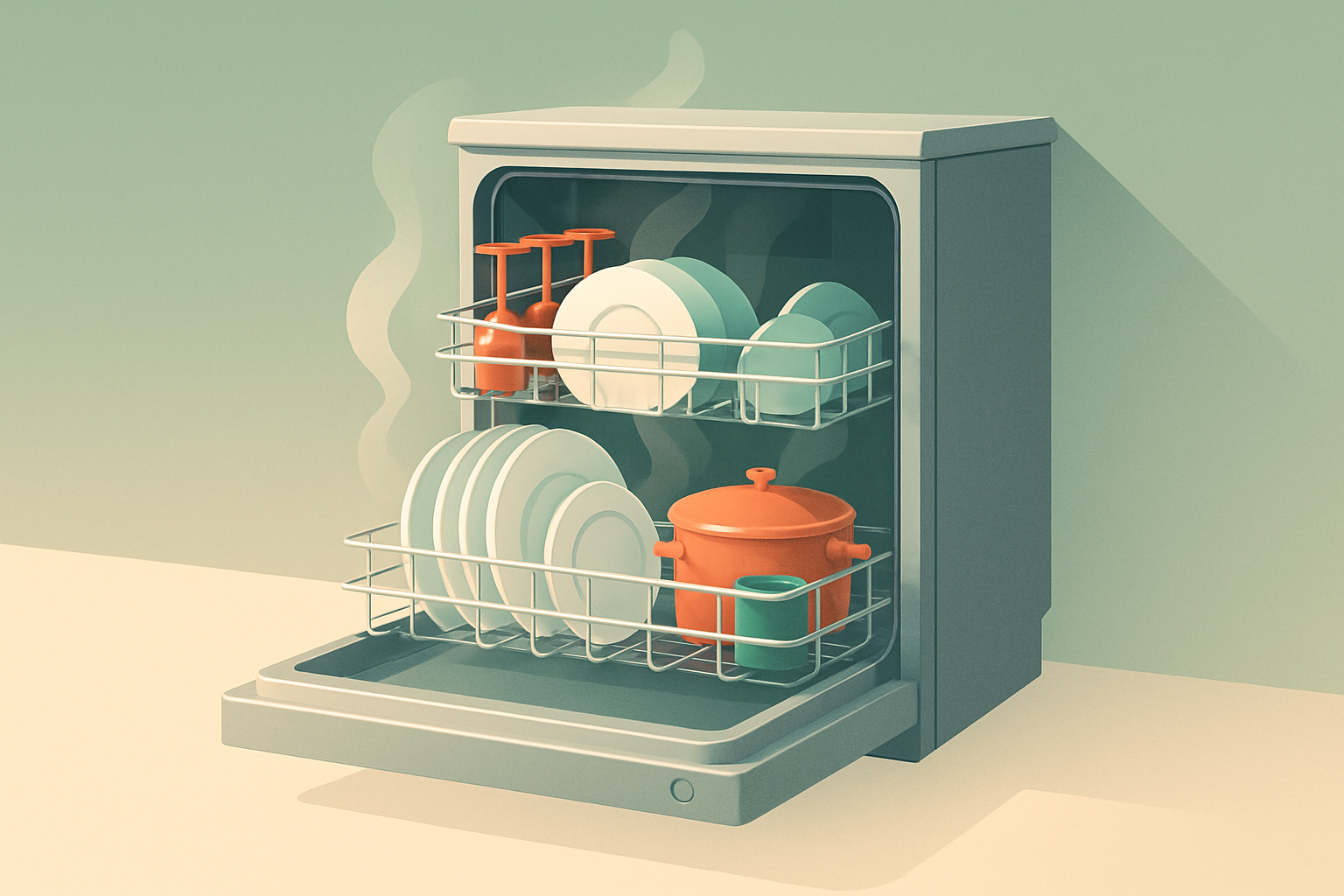
Most advice on how to choose a dishwasher hands you a feature checklist and wishes you luck — third racks, smart apps, sanitize cycles, a wall of decibel numbers. But a dishwasher isn't really a gadget; it's a fixed appliance you'll live with for a decade or more, bolted into a specific hole in your cabinets and running a few feet from where you cook, eat, and talk. The features that change your daily life are a short list. Most of the rest is sticker decoration. So before you compare a single model, let's sort the two — so you buy a machine that actually fits your kitchen and your habits, and not a dollar of features you'll never notice.
Start with your kitchen and your habits, not the feature list
Three things shape this decision before any feature does. Get honest about them first:
- The space you have. Measure the cabinet opening — width, height, and depth. Most kitchens are built around a standard 24-inch slot, but small kitchens, islands, and apartments often aren't. This single number rules whole categories of machine in or out.
- The acoustics of your kitchen. Is it a closed room behind a door, or an open-plan space where the dishwasher runs while you're watching TV or hosting dinner? In an open layout, noise is not a luxury spec — it's the difference between running it whenever and waiting until everyone's asleep.
- How you actually wash. Daily small loads or big weekend marathons? Lots of plastic containers and baby bottles? Pots, pans, and baked-on dishes? Delicate stemware? Your real load is the thing every other choice should serve.
Write these down. Everything below maps back to them. The most common dishwasher-shopping mistake is buying for a kitchen and a routine that aren't yours.
Get the fit right: size, type, and installation
Before performance, you need a machine that physically belongs in your home. The main types, described plainly:
- Standard built-in (about 24 inches wide): the default for most houses. Best capacity and, usually, the best value per place setting. If you have the slot, this is the baseline to beat.
- Compact built-in (around 18 inches): the same idea, narrower, for tight kitchens. You trade capacity for fit.
- Countertop: a small unit that sits on the counter and connects to your faucet. Holds only a few settings — handy for tiny rentals or a single person, limited for anyone cooking real meals.
- Portable / freestanding: rolls on casters and hooks to the sink when you need it. A genuine answer for renters or kitchens with no cabinet cutout, at the cost of convenience and counter space.
- Drawer dishwashers (single or double): ergonomic, easy to load small batches, and flexible — but you pay more per unit of capacity. Often chosen for design and back-friendliness rather than raw value.
- Panel-ready / integrated: built to accept a custom cabinet panel so the appliance disappears into the kitchen. A design decision that adds cost; purely cosmetic in terms of how clean your dishes get.
Two installation realities to check early: whether your spot is hardwired or plug-in, and where the water supply and drain run. A like-for-like swap is simple; changing type or location can mean a plumber or electrician. Factor that into the true cost before you fall in love with a model.
The specs that actually move the needle
Once the fit is settled, a handful of specs separate a machine you'll love from one you'll tolerate.
Noise
Quietness is measured in dBA, and lower is quieter. The gap between a budget machine and a premium one is the difference between a noticeable hum you can hear across the room and a unit so quiet you check a status light to know it's running. If your kitchen is open to living space, treat this as a top-tier priority. If it's behind a door in a busy house, you can relax it and save money.
Tub material
The inner tub is usually stainless steel or plastic, and it quietly affects several things at once. Stainless tubs hold heat better (which helps drying), resist stains and odors, tend to run quieter, and generally last longer. Plastic tubs cost less and are perfectly serviceable, but they don't dry or deaden sound as well. Watch the marketing here: a stainless exterior doesn't guarantee a stainless tub. Confirm the inside.
Drying method — the feature people are most surprised by
How a dishwasher dries is where expectations break most often. The common approaches:
- Heated dry: a heating element evaporates water. Effective, but uses more energy, adds heat to the kitchen, and can warp or melt lightweight plastics.
- Condensation drying: relies on leftover heat and cool stainless walls to pull moisture off. Gentler, quieter, more efficient — but slower, and it often leaves plastics damp.
- Fan-assisted or auto-open door: a fan, or a door that pops open at the end, speeds the drying and clears steam. A nice middle ground.
- Mineral (zeolite) drying: a premium approach where a mineral absorbs moisture and gives off heat. Thorough, but you'll pay for it.
There's no free lunch: the gentlest, most efficient drying is also the slowest and the one most likely to leave a damp lid. If you wash a lot of plastic, weigh this heavily.
Capacity and rack flexibility
Capacity is quoted in "place settings," and bigger numbers tempt everyone. But for most households, rack flexibility matters more than raw capacity. Look for a third rack for utensils and small items, foldable tines, and a height-adjustable upper rack that makes room for tall pots below or stemware above. A flexible mid-size machine you can actually load beats a cavernous one with rigid racks that fight your awkward dishes.
How it senses and cleans
Mid-range and up usually add a soil sensor that gauges how dirty the load is and adjusts water, heat, and time automatically — saving resources on light loads and working harder on caked-on ones. It's one of the more genuinely useful "smart" features because it works without you thinking about it.
Match the dishwasher to how you live
Here's roughly how the tiers shake out, described neutrally so you can find yourself on the ladder:
- Budget: often a plastic or partial tub, a basic set of cycles, heated drying, rigid racks, and a higher noise level. Cleans dishes fine. The compromises are comfort, quietness, and flexibility — not whether your plates come out clean.
- Mid-range: typically a stainless tub, a soil sensor, quieter operation, a third rack, and more adjustable racking. This is where most people get the biggest jump in everyday satisfaction for the money.
- Premium: very low noise, advanced drying, highly flexible racks, refined controls, and design options like panel-ready fronts. Real benefits — but the curve flattens, and you're increasingly paying for quiet, drying polish, and looks.
Notice the pattern: the leap from budget to mid-range usually buys you things you'll feel every day — silence, a stainless tub, racks that flex. The leap from mid to premium buys refinement that's lovely but optional. Spend where your daily life actually improves.
Don't skip the unglamorous details
These rarely make the headline but decide whether you still like the machine in year three:
- Controls — front vs. hidden. Front controls sit on the door face: cheaper, and you can see and change the cycle without opening the door. Hidden (top-edge) controls give a seamless look and are harder for kids to bump, but you must open the door to check progress (many project a light or time onto the floor).
- Filter type. A self-cleaning filter with a built-in grinder means you never clean it — but it's louder. A manual filter runs quieter but needs a periodic rinse. Quiet premium machines usually use the manual kind, so factor a few minutes of upkeep into "whisper-quiet."
- Efficiency. Look for an efficiency rating and modest water use per cycle. A modern efficient dishwasher generally uses less water than washing the same load by hand — a point in its favor on both bills and effort.
- Smart features, honestly. Wi-Fi, app cycle-start, leak alerts, and auto-reordering detergent are nice-to-haves, not deciders. Don't let a connectivity feature outrank tub material or noise.
Questions to ask before you buy
- What exactly are my opening dimensions, and is my spot hardwired or plug-in?
- Is my kitchen open-plan — and how much do I care about noise?
- Do I wash a lot of plastics? (If yes, drying method matters more.)
- Do I need big capacity, or do I need racks that flex around odd dishes?
- Front controls I can read at a glance, or a clean hidden-control look?
- What's the true installed cost, including any plumbing or electrical work?
When you know what to look for, search without the noise
Here's the part most guides skip. Once you know your fit, your noise tolerance, and the two or three specs that matter to you, the decision isn't the hard part anymore — the noise around it is. Many "best dishwasher" roundups are ranked partly by affiliate commission: the site earns a cut when you buy through its link, which can quietly nudge certain models up the list. That doesn't make them worthless — plenty do real testing — it's just an incentive worth reading with clear eyes. Reviews deserve the same skepticism, since ratings can be padded with planted positives or buried by competitors, so favor detailed, specific write-ups over a glowing star average.
A cleaner approach: do a little structured homework, then compare on your criteria, not theirs. Our guides on how to research a product before buying and how to compare products objectively walk through verifying claims and scoring options on the specs that matter to you. If price is the worry, how to set a shopping budget helps you decide your ceiling before a showroom does it for you.
When you're ready to look at real machines, this is candidly why we built Shopi: an AI shopping advisor with no affiliate links, no ads, and no commissions — we earn nothing when you buy, so a recommendation rises because it fits you, not because it pays us. You can tell it something like "quiet built-in for an open-plan kitchen, stainless tub, third rack, under [your budget]" and get options with a plain-English "why this fits" for each, plus a relevance score. It links you straight to each product's own page, never a kickback link — and it can be wrong, so it shows its reasoning for you to check. (Here's exactly how it works.)
The framework above is the real value, and it's yours whether or not you ever open our app. Nail the fit, prioritize noise and drying for how you actually live, and treat the rest as optional polish. If you'd like a hand once you know what you're after, try Shopi free with no signup — the demo runs on a sample shopper profile, so it shows how the reasoning works rather than results tailored to you. Create a free profile (under two minutes) when you want recommendations matched to your own kitchen, budget, and priorities. No pressure either way.
Frequently asked questions
What is the most important thing to get right when choosing a dishwasher?
Fit comes first: measure your cabinet opening and confirm whether the spot is hardwired or plug-in, because that rules whole categories of machine in or out. After fit, the specs that change daily life are noise level (especially in an open-plan kitchen), tub material, drying method, and rack flexibility. Most people overrate raw capacity and underrate these.
What's the difference between a stainless steel and a plastic tub?
A stainless tub holds heat better (which helps drying), resists stains and odors, usually runs quieter, and tends to last longer. A plastic tub costs less and works fine, but dries and muffles sound less well. One catch: a stainless exterior doesn't guarantee a stainless interior, so confirm the tub itself, not just the door.
Why does my dishwasher leave plastic items wet?
It likely uses condensation drying, which relies on residual heat and cool stainless walls instead of a heating element. It's gentler and more energy-efficient but slower, and lightweight plastics don't hold heat, so they stay damp. Heated, fan-assisted, or mineral drying dries plastics better — at the cost of energy, heat, or price. If you wash a lot of plastic, weigh the drying method heavily.
Is it worth paying for a premium dishwasher?
It depends where you are on the ladder. The jump from budget to mid-range usually buys things you'll feel every day — a stainless tub, lower noise, a soil sensor, and flexible racks. The jump from mid to premium mostly buys refinement: near silence, advanced drying, and design touches. Those are real but optional, so spend where your daily life actually improves rather than on the highest number.
How does Shopi help me choose a dishwasher differently?
Shopi is an AI shopping advisor with no affiliate links, ads, or commissions, so recommendations are based on fit rather than payouts. You describe your kitchen, habits, and budget, and it returns options with a transparent 'why this fits' explanation and a relevance score, linking you directly to each product's own page. You can try a free demo with no signup (it runs on a sample profile, so it isn't tailored to you), or create a free profile for personalized results.