Buying guides
How to Choose a Blender
By The Shopi Team · 8 min read
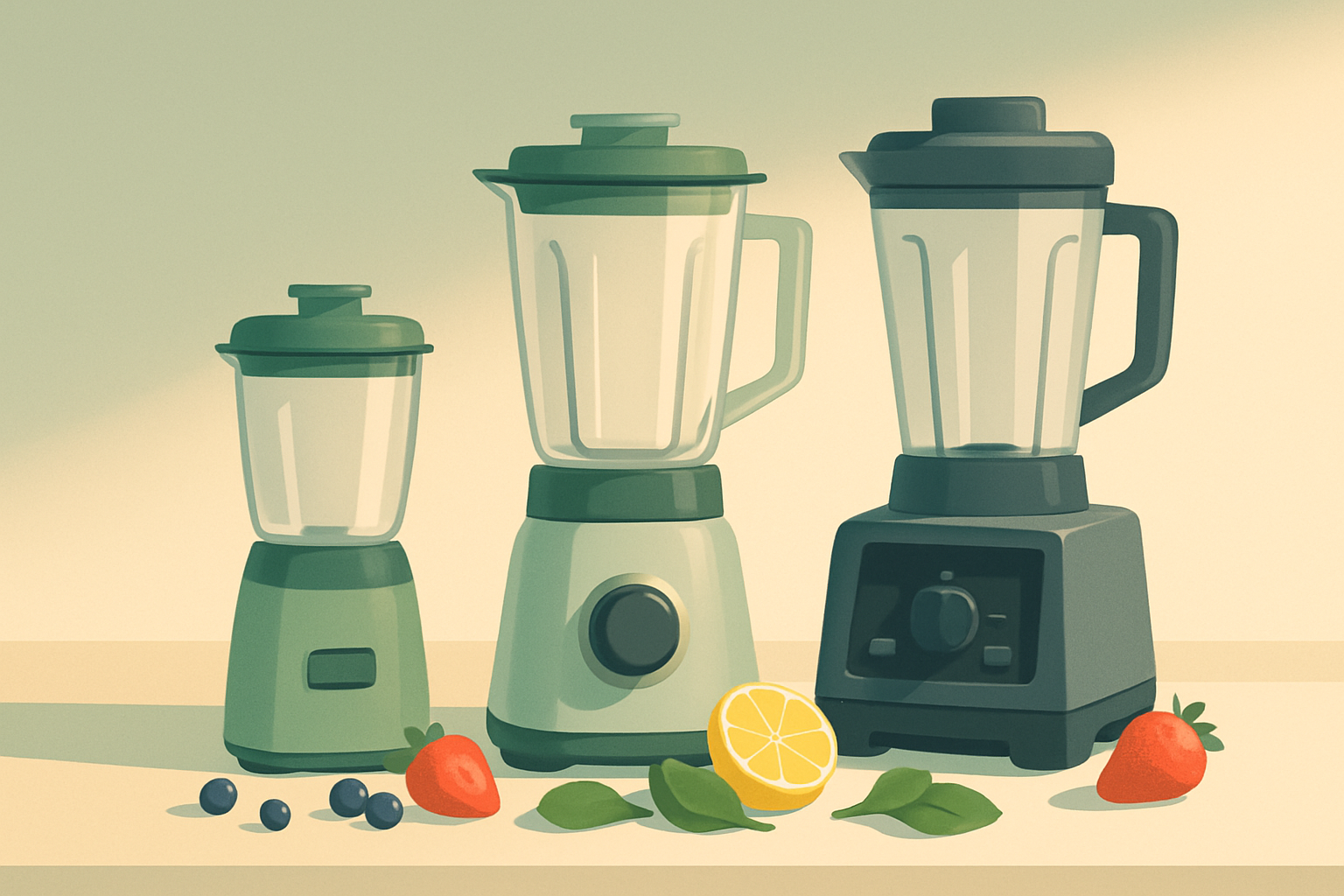
Figuring out how to choose a blender sounds like it should take five minutes, until you open a product page and get hit with wattage numbers, blade counts, "pro" presets, and a price range that runs from pocket change to a serious chunk of a paycheck. The truth is that most of those numbers don't tell you what you really want to know: will this thing make what I eat, fit where I live, and still get used a year from now?
This guide skips the hype and walks through the criteria that actually decide whether a blender is right for you, what you'll blend, which type suits your life, how much power you genuinely need, and the two boring specs (noise and cleanup) that quietly determine whether a blender lives on your counter or in the back of a cupboard. No brand names, no "best pick," no affiliate links. Just the decision framework.
Start with what you'll actually blend
Before power, before price, answer one question honestly: what will you make most often? Not what you imagine making, what you'll actually reach for on a Tuesday.
The answer changes everything else. A daily smoothie habit, frozen-drink nights, hot soups, nut butters, baby food, sauces and dressings, or grinding coffee and spices all ask different things of a machine. A blender that's perfect for one can be frustrating or pointless for another.
Write down your top two or three uses. If they're light (a morning smoothie, the occasional salsa), you don't need to pay for a powerhouse. If they're demanding (crushing ice every day, blending hot soup, making nut butter from scratch), a cheap motor will struggle, overheat, and disappoint you. Matching the machine to your real habits is the single highest-leverage decision here.
Match the type to your life
Blenders come in a few distinct shapes, and they're genuinely different tools, not just different price tags. Here's what you're choosing between.
- Full-size countertop (jug) blender. The all-rounder. A tall pitcher on a motor base, good for batches, smoothies for the family, soups, and most everyday tasks. The trade-off is a bigger footprint and more to clean.
- Personal / single-serve ("bullet") blender. A small cup that screws onto a compact base; you blend and drink from the same vessel. Cheap, fast, easy to store, and ideal for one smoothie at a time. The trade-offs: small capacity, modest power, and it usually can't handle hot liquids or big jobs.
- Immersion / hand (stick) blender. A wand you put directly into a pot or jar. Brilliant for blending soup right where you cooked it, plus easy storage and minimal cleanup. The trade-offs: it can't crush ice well and isn't made for thick frozen drinks.
- High-performance blender. A premium countertop machine with a strong, high-torque motor that can pulverize almost anything, often making hot soup through blade friction and nut butter from raw nuts. The trade-offs: it's expensive, loud, and overkill if your needs are simple.
Notice that the "best" type depends entirely on the use case you wrote down a moment ago. Someone who lives on grab-and-go smoothies and someone who makes big batches of soup should rationally buy different machines, even at the same budget.
Power isn't just a wattage number
Wattage is the spec everyone fixates on, and it's the most misleading. Higher wattage can help with ice, frozen fruit, and tough ingredients, but watts measure how much electricity the motor draws, not how well the machine actually blends.
Real-world performance comes from the whole system: motor torque, blade design, and the shape of the jar that pulls food back down into the blades. A well-engineered moderate-wattage blender can out-perform a poorly designed high-wattage one. So treat wattage as a loose hint, not a scoreboard.
A more useful way to think about it: do your toughest regular tasks need brute force? Daily ice-crushing, frozen-fruit smoothies, nut butters, and dough-like mixtures reward a stronger motor. Soft fruit, cooked vegetables, protein shakes, and dressings don't. Buy the power your hardest frequent job needs, not the biggest number on the box.
The jar matters more than you think
The container is easy to overlook and surprisingly important. Two things to weigh: material and size.
- Plastic (usually BPA-free Tritan). Lightweight and won't shatter if you knock it. Over time it can scratch, cloud, or hold onto strong smells.
- Glass. Doesn't scratch or stain and feels solid, but it's heavier and can crack under sudden temperature changes (think pouring something very hot into a cold jar).
- Stainless steel. Durable and great at hiding wear, but opaque, so you can't see what's happening inside while it blends.
Size is the other half. A large pitcher is great for batches but awkward and inefficient for a single smoothie, while a small personal cup can't make soup for a family. Match capacity to your household, and check one easy-to-forget detail: a tall blender may not fit under your kitchen cabinets, and a wide base eats counter space you might not have.
Controls, speeds, and presets: what you'll actually use
Control panels are where marketing piles on features. More buttons feel like more value, but the useful core is simple: a few speed options and a pulse function. Variable speed lets you go gentle on soft ingredients and aggressive on hard ones; pulse gives you short bursts of control for chunky textures.
Presets (a "smoothie" button, an "ice crush" button) are convenience, not magic, they just run a pre-programmed pattern of speeds. They're genuinely handy if you'll use them, and clutter if you won't. Think about which ones map to your actual habits before paying extra for a dozen of them.
One practical note on the interface itself: dials and buttons are simple and tactile, while flat touchpads wipe clean easily but can be fussier to press with wet hands. It's a minor thing, but you'll touch it every single use.
The two specs that decide if you keep using it
Here's the part most buying advice skips. The blenders that end up exiled to a cupboard usually aren't underpowered, they're too loud or too annoying to clean.
Noise. Powerful blenders are genuinely loud. If you live in an apartment, blend early in the morning, or have an open-plan kitchen near sleeping kids, this matters more than another 200 watts. There's a real trade-off: the machines that crush ice effortlessly are often the ones that'll wake the house.
Cleaning. A blender you dread washing is a blender you stop using. Look at how the parts come apart. Fixed blades mean fewer pieces and fewer leak points but trickier cleaning around the base; removable blades clean more easily but add parts to track and seal. Many blenders "self-clean" with a drop of soap, warm water, and a quick run, which is the realistic test: how fast can you make it ready for tomorrow? If parts are dishwasher-safe, confirm whether that includes the jar or only the lid and small bits.
Weigh these honestly against the exciting specs. A slightly less powerful blender you actually clean and use beats a beast that intimidates you.
Match your budget to your needs, not the hype
Blenders span a wide price range, and more money mostly buys motor strength, build quality, longevity, and a longer warranty, not necessarily a better smoothie if your needs are modest. It helps to think in rough tiers rather than chasing exact prices, which shift constantly.
- Entry tier. Fine for soft fruit, protein shakes, and occasional light use. Expect a shorter lifespan and a motor that strains on ice and frozen loads.
- Mid tier. The sweet spot for most households: enough power for daily smoothies and the occasional tough job, with reasonable durability.
- High-performance tier. Worth it if you'll genuinely use the capability, hot soup, nut butter, daily ice, with stronger motors, sturdier builds, and often a notably longer warranty.
Speaking of which, the warranty is a quiet signal. A company offering many years of motor coverage is betting the machine will last; a thin warranty tells you something too. Also check whether jars, blades, and gaskets can be bought as replacement parts, since a $5 seal shouldn't doom an otherwise-good blender. If you want a structured way to land on the right number, our guide to setting a shopping budget helps you anchor a range before the marketing tugs you upward.
Questions to ask before you buy
Once you've thought it through, pressure-test any blender against a short checklist. Comparing options fairly is its own skill, and our guide to comparing products objectively lays out a method that works for any purchase. For a blender, ask:
- What are the two or three things I'll actually make most often?
- How many people am I usually blending for?
- Do I need hot soup, nut butter, or daily ice crushing, or none of those?
- Where will it live, and does it fit under my cabinets and on my counter?
- How loud is too loud for my home and schedule?
- Realistically, how easy is it to clean after a typical use?
- What's the warranty, and can I buy replacement parts?
If a blender answers those well, the brand and the wattage number matter far less than the marketing wants you to believe.
How Shopi helps
Once you know your criteria, the hard part is searching without getting steered. That's where Shopi is built differently: it runs zero affiliate links, zero ads, and earns no commission when you buy, so it has no hidden reason to push you toward a pricier machine. It learns your needs, budget, and values as you search, explains every recommendation in plain language with a relevance score, and links you straight to the product's own page. You can try a no-signup demo to see how it works, just know it runs on a sample shopper profile, so the results won't reflect your kitchen until you create a free profile (under two minutes). After that, it tailors suggestions to what you actually cook. Shopi's AI can still get things wrong and can't taste a smoothie for you, but it can help you weigh blenders against your own criteria instead of someone else's commission.
Frequently asked questions
How many watts does a good blender need?
Less than the marketing implies. Wattage measures the electricity the motor draws, not how well the machine blends, real performance comes from motor torque, blade design, and jar shape working together. Higher wattage helps with daily ice-crushing, frozen fruit, and nut butters, but soft fruit, cooked vegetables, and protein shakes don't need much. Buy the power your hardest frequent task requires, not the biggest number on the box.
What's the difference between a personal, countertop, and immersion blender?
They're genuinely different tools. A personal (bullet) blender uses a small cup you blend and drink from, ideal for single smoothies and tight on power and capacity. A full-size countertop blender is the all-rounder for batches, soups, and everyday jobs. An immersion (hand) blender is a wand you put right into a pot, perfect for soups and easy cleanup but not for ice or thick frozen drinks. Pick the type that matches your most common use.
Do I need an expensive high-performance blender?
Only if you'll use the capability. High-performance blenders justify their price for demanding, frequent jobs like making hot soup through blade friction, grinding nut butter from raw nuts, or crushing ice every day. If your habit is the occasional smoothie or a soft-fruit shake, a mid-tier machine will do the same job for far less. Match the tier to your real needs, not the aspirational ones.
Is a glass or plastic blender jar better?
Neither is universally better; they trade off different things. Plastic (usually BPA-free Tritan) is light and won't shatter, but can scratch, cloud, or retain odors over time. Glass resists scratching and staining and feels sturdy, but it's heavier and can crack under sudden temperature changes. Stainless steel is durable and hides wear well but is opaque, so you can't see inside. Choose based on whether weight, longevity, or visibility matters most to you.
Can an AI shopping tool pick the right blender for me?
It can narrow the field against your own criteria, but it can't taste a smoothie for you, and AI can make mistakes. The honest approach is to define what you'll blend, your budget, and your space first, then use a tool with no commission or ad incentive to surface options that fit, and make the final call yourself.