Buying guides
How to Choose a Microwave
By The Shopi Team · 8 min read
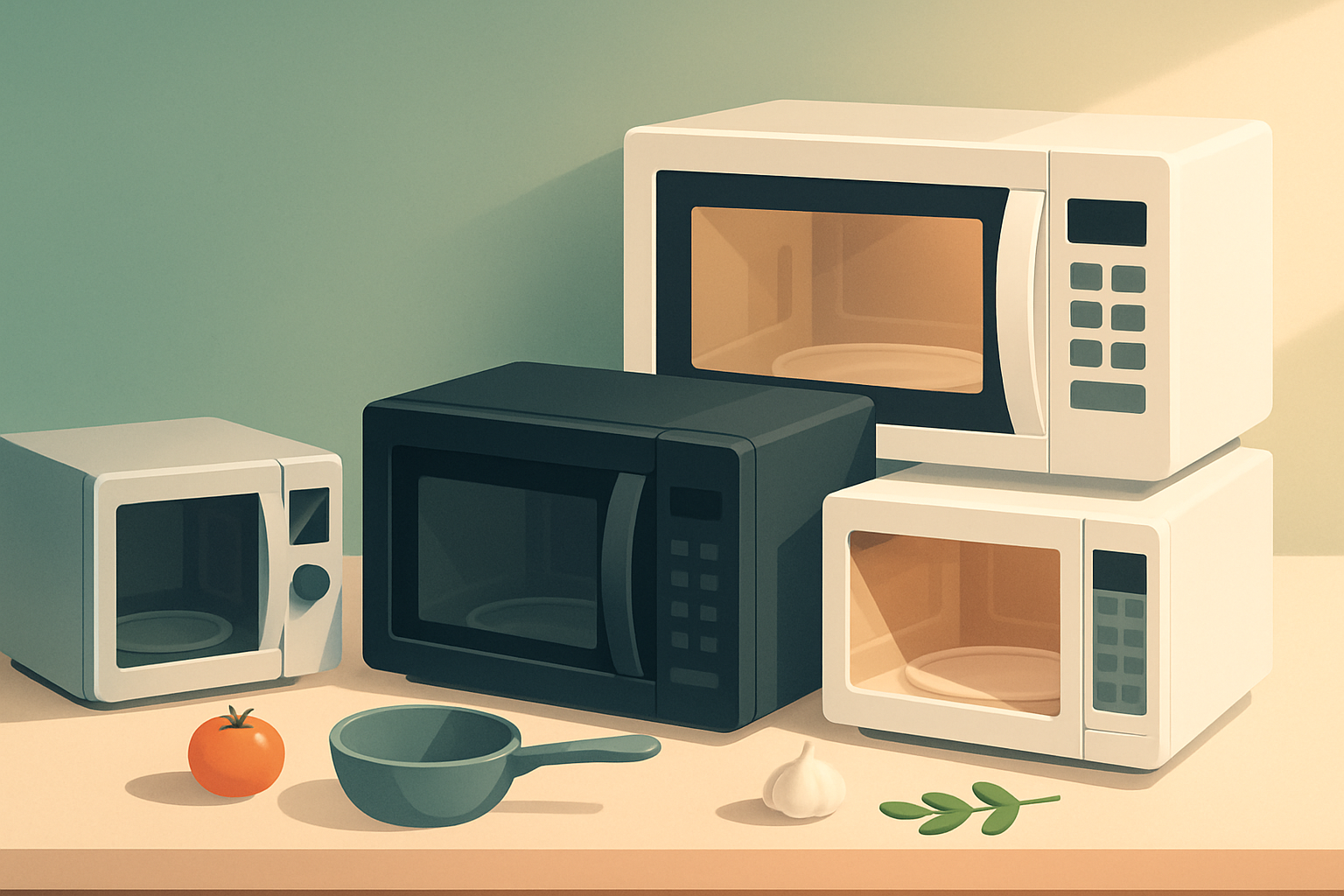
A microwave is the appliance most people buy the way they buy batteries — grab one that looks fine, that fits the budget, hope it works. Then you live with it three times a day for the next decade, fighting a too-small turntable, beeps you can't mute, or a unit that crowds a counter you didn't have to spare. The truth is that learning how to choose a microwave isn't about hunting for the highest wattage or the longest feature list. It's about matching one boring metal box to where it'll live and how you actually cook. Get that order right and the rest of the decision gets simple. Let's build a framework that ties the spec sheet back to your kitchen, your dishes, and your daily routine.
Start with where it goes and how you cook
Before a single spec, answer three plain questions:
- Where will it physically sit? On a counter, mounted over the stove, tucked into a cabinet, or pulled out as a drawer? This single answer narrows your choices more than anything else, because it decides the type of microwave you're even shopping for.
- What do you reheat and cook most? Be honest about the 90% case. If it's coffee, leftovers, and frozen meals, you need something very different from someone who wants to roast, bake, and crisp food in the same box.
- How much room — and how much counter — can you give up? Kitchen space is the currency here. A bigger interior almost always means a bigger footprint, and counter space you give up doesn't come back.
Everything below maps to these answers. The most common regret isn't buying a "bad" microwave — it's buying one that fights the kitchen it went home to.
Pick the right type for your kitchen
This is the real fork in the road, and the prices and trade-offs differ wildly. In plain terms:
- Countertop — the mainstream choice: affordable, no installation, and you can take it with you when you move. The trade-off is that it eats counter space and you handle its own ventilation clearance.
- Over-the-range (OTR) — mounts above your stove and doubles as your range hood with a built-in light and exhaust fan. It frees the counter but requires installation, a compatible cabinet above the range, and a real look at how it vents (more on that below).
- Built-in — installed flush into cabinetry or a wall for a seamless, integrated look. The cleanest aesthetic, the highest cost, and often a separate trim kit and professional fit.
- Drawer style — slides out from below the counter like a drawer, which is easy on the back and great for islands. It's a premium convenience that you pay handsomely for.
- Convection combo — any of the above that adds a heating element and fan so it can also bake, roast, and brown like a small oven. Genuinely useful in a small kitchen or as a second oven; overkill (and pricier, with more to clean) if you only reheat.
There's no "best" type — only fit. Renters and small kitchens lean countertop. Tight counters with a stove that needs venting lean OTR. A remodel chasing a built-in look pays for built-in or drawer. Choose for your space, not the showroom display that looked sleek.
Size it to your dishes, not the box
Microwave capacity is measured in cubic feet of interior space, and it's easy to misjudge from the outside. Roughly speaking, units cluster into compact, mid-size, and large tiers — and the right tier is the one that swallows the dishes you actually use.
Two real-world checks beat the cubic-feet number:
- Will your everyday plate or casserole dish fit and turn? A wide dinner plate or a rectangular leftovers container can jam against the walls or stop the turntable mid-spin in a small unit. If you reheat family-size dishes, measure your biggest one.
- How big is the turntable, not just the cavity? Some interiors are tall but narrow. A few models skip the turntable entirely and use a flatbed system, which lets you slide larger or oddly shaped dishes in and makes the floor easier to wipe.
Bigger isn't automatically better. A large-capacity unit demands more counter or cabinet space and uses more energy to fill. Size to the food, then stop.
Decode the specs that actually matter
Only a handful of specs deserve real attention. Here's what each does and where people overpay.
Wattage
This is cooking power — higher wattage generally means faster, more even heating. Many frozen-food and microwave-meal instructions are written assuming a roughly mid-to-high-power oven, so a low-wattage compact unit will leave cold spots and run long past the printed time. If speed and even results matter, favor more power; if it's a dorm or a coffee-and-popcorn machine, a lower-wattage compact is fine and cheaper. Don't treat wattage as a bragging number, though — it's only one piece, and a powerful microwave with crude controls can still cook unevenly.
Inverter vs. standard power
This rarely makes the sticker, but you'll feel it. A standard (transformer) microwave only runs at full power, so "50% power" really means it pulses full blast on and off — which can overcook edges while the center stays frozen. An inverter microwave delivers true, continuous lower power, giving gentler, more even defrosting, melting, and simmering. If you defrost meat, soften butter, or melt chocolate often, inverter power is one of the few upgrades that genuinely changes results.
Sensor cooking and controls
A humidity sensor detects the steam coming off your food and adjusts time automatically, so you stop guessing and stop overcooking. It's one of the more useful conveniences if you reheat a lot of varied foods. Beyond that, controls are a daily ergonomics decision: dials are simple and forgiving, button or touch panels offer presets and a handy "add 30 seconds" key, and a flat membrane is easier to wipe clean than recessed buttons. The fanciest preset menu you'll never use is just clutter.
Convection (if you went combo)
If you're considering a convection model, judge it like a small oven: does it preheat reasonably, how even is the browning, and is the rack worth the extra cleaning? Convection adds real capability, but only if you'll actually bake and roast in it.
Measure before you fall in love
This is the step that turns a great deal into a return. Specs are useless if the unit doesn't fit and breathe.
- Measure the opening, then the unit — including the door swing. A microwave that fits a cabinet cubby on paper can still need clearance to open, and external dimensions vary a lot for the same interior size.
- Respect ventilation clearance. Microwaves vent heat and need air gaps around them. Cramming a countertop model into a tight shelf without the specified clearance can cause it to overheat or shut down.
- For OTR units, check how it vents. Some duct exhaust to the outside; others simply recirculate air back into the kitchen through a filter, which does far less for steam and odors. If real venting matters to you, confirm which one you're getting and that your cabinet supports it.
- Mind the plug and the power. Confirm there's an outlet where you need one, and that a high-power unit won't be sharing a strained circuit with other heavy appliances.
Measure twice. A cardboard mock-up of the footprint on your counter takes two minutes and prevents the most expensive mistake on this list.
Don't skip the everyday stuff
Specs get the stickers, but these details decide whether you'll still like it in year three.
- Cleaning. Interior finish matters more than people expect — smooth, easy-wipe cavities and a flat (or removable) floor save you weekly scrubbing. Recessed buttons and tight crevices trap splatter.
- Noise and the beep. You'll hear this thing every day. Check whether the beeps can be muted and how loud the run cycle is — a small thing that becomes a big thing in an open kitchen or a quiet apartment.
- Door and light. Push-button doors versus pull handles is a genuine preference; try to picture using it with greasy hands. A decent interior light and a clear window beat squinting at your food.
- Child lock and quick keys. A control lock is worth it with kids around, and one-touch start or "add 30 seconds" keys are the features you'll actually use a dozen times a day.
Common pitfalls and smart questions to ask
A few traps catch first-time buyers, and a few questions cut straight through them:
- Don't buy on wattage alone. A high number with poor power control and no sensor can still cook unevenly. Balance power with how the unit manages that power.
- Don't over-buy features. Wi-Fi, voice control, and scan-a-barcode cooking sound impressive and are mostly the part people stop using by month two. Pay for what you'll touch daily.
- Don't assume the interior matches the outside. Ask: will my largest everyday dish fit and turn? External size is a poor guide to usable space.
- Ask: is it inverter or standard power? It predicts defrosting and reheating quality better than almost any other single answer.
- For OTR: ask whether it vents outside or just recirculates, and how strong the fan is. Don't discover the difference after install.
- Read reviews with clear eyes. Favor detailed, specific write-ups about reheating evenness, noise, and door feel over a glowing star average, and check more than one independent source before you commit.
How Shopi helps you choose
Here's the part most guides skip. Once you know your spot, your dishes, and your priorities, the hard part isn't the decision — it's the noise. Plenty of "best microwave" lists are ranked partly by affiliate commission: the site earns a cut when you buy through its link, which can quietly nudge certain models toward the top. That doesn't make them worthless, but it's an incentive worth reading around. Our guides on how to research a product before buying and how to compare products objectively help you score options on your criteria instead of someone else's spotlight.
When you're ready to look at real units, this is candidly why we built Shopi: an AI shopping advisor with no affiliate links, no ads, and no commissions — it earns nothing when you buy, so a recommendation rises only because it fits you. It learns your needs, budget, and values, then explains every pick in plain language with a relevance score, and links you straight to the product's own page rather than a kickback link. You can tell it something like "compact countertop microwave with inverter power for a small apartment, quiet, easy to clean" and see options with a clear "why this fits" for each.
You can try it free with no signup — the demo runs on a sample shopper profile, so it shows how the reasoning works rather than results tailored to you. Create a free profile (under two minutes) when you want recommendations matched to your own kitchen and budget. The framework above is the real value, and it's yours whether or not you ever open the app: start with where it goes and what you cook, size it to your dishes, match the power tech to how you reheat, and measure before you fall in love.
Frequently asked questions
What is the most important thing to get right when choosing a microwave?
Where it will live and how you actually cook — before any spec. That single pair of answers decides the type (countertop, over-the-range, built-in, drawer, or convection combo), which in turn sets your budget, footprint, and installation needs. Once you know the type and have measured the space it's going into, the capacity and feature decisions mostly answer themselves. Most regret comes from buying a microwave that fights the kitchen it went home to, not from buying a 'bad' one.
How much wattage do I actually need in a microwave?
It depends on how you cook. Higher wattage generally heats faster and more evenly, and many frozen-meal instructions assume a mid-to-high-power oven, so a low-wattage compact unit will leave cold spots and run long. If you cook full meals and want speed, favor more power; for coffee, popcorn, and light reheating, a lower-wattage compact is fine and cheaper. Just don't treat wattage as a bragging number — how the unit manages its power (inverter tech, sensor cooking) matters as much as the raw figure.
What is an inverter microwave, and is it worth it?
A standard microwave only runs at full power and fakes lower settings by pulsing on and off, which can overcook edges while the center stays frozen. An inverter microwave delivers true, continuous lower power, so defrosting, melting, and simmering come out gentler and more even. It rarely appears on the marketing sticker, but if you defrost meat, soften butter, or melt chocolate often, it's one of the few upgrades that genuinely changes your results — and worth seeking out.
What's the difference between countertop and over-the-range microwaves?
A countertop model is affordable, needs no installation, and moves with you, but it takes up counter space and you manage its ventilation clearance. An over-the-range (OTR) model mounts above your stove and doubles as a range hood with a light and exhaust fan, freeing the counter — but it requires installation, a compatible cabinet, and a check on how it vents. Some OTR units duct steam and odors outside, while others just recirculate air through a filter, which does far less, so confirm which one you're getting.
How does Shopi help me choose a microwave differently?
Shopi is an AI shopping advisor with no affiliate links, ads, or commissions, so it earns nothing when you buy and recommends based on fit, not payouts. You describe where it'll go, what you cook, and your budget, and it returns options with a plain-English 'why this fits' explanation and a relevance score, linking you directly to each product's own page. You can try a free demo with no signup (it runs on a sample profile, so it isn't tailored to you), or create a free profile in under two minutes for personalized results.