How shopping works
Dark Patterns in Online Shopping: Sneaky Tricks That Rush You
By The Shopi Team · 6 min read
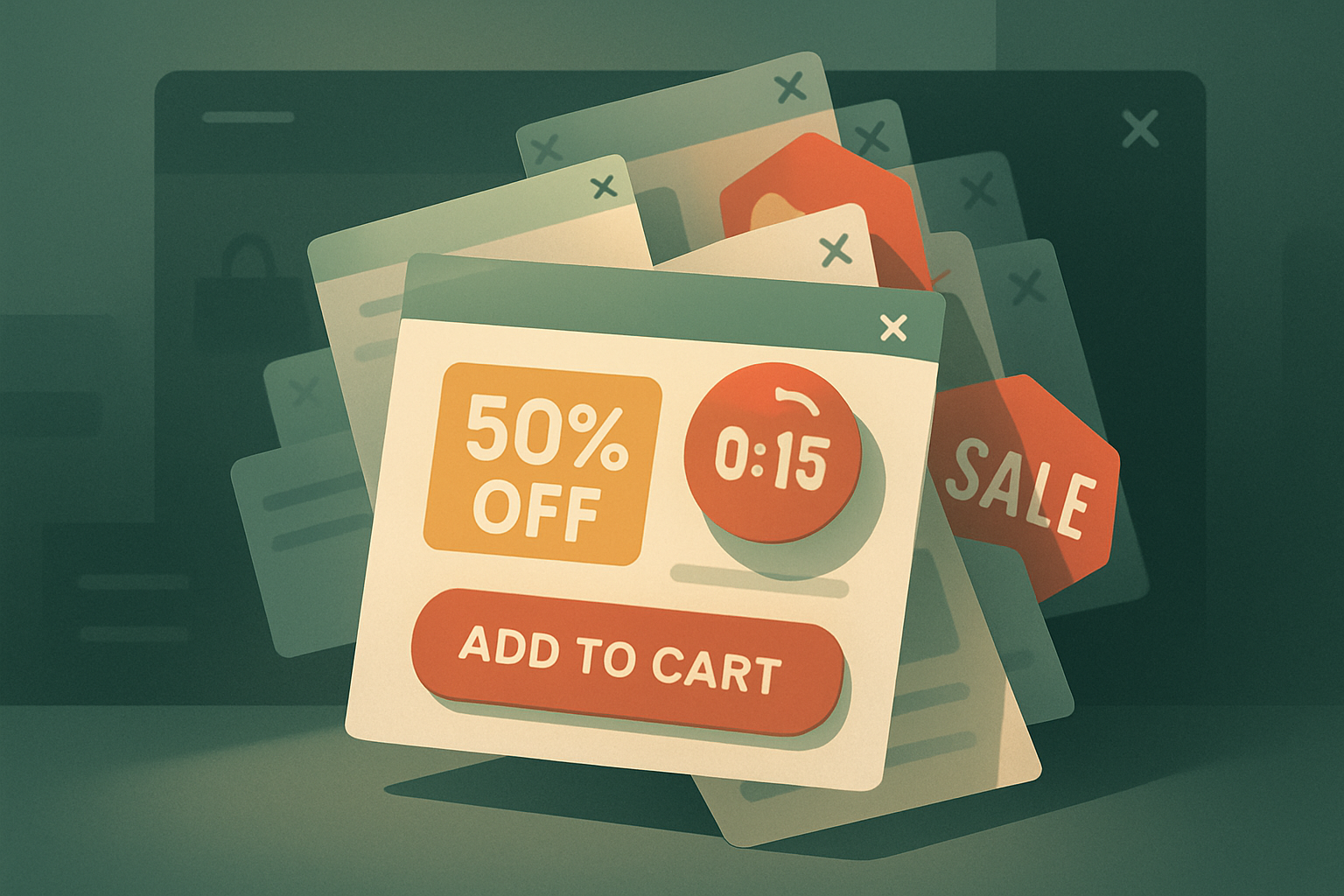
You added one thing to your cart, and somehow a countdown clock appeared, a "service fee" materialized at checkout, and the button to decline an upsell made you feel like a cheapskate. That is not bad luck. It is design. Dark patterns in online shopping are interface tricks built to nudge, rush, or guilt you into spending more than you meant to — or into buying something you would have skipped with a clear head. The good news: once you can name them, they lose most of their grip. This guide catalogs the most common ones — fake countdowns, drip pricing, confirmshaming, and their cousins — and hands you a plain way to neutralize each.
What "dark patterns" really are
The term was coined more than a decade ago by UX researcher Harry Brignull, who now prefers "deceptive patterns" — a clearer name for the same thing. A dark pattern is a deliberate design choice that benefits the business at your expense, usually by exploiting how human attention and emotion work.
They are effective because they target predictable mental shortcuts. We fear missing out. We trust default settings. We avoid the small friction of reading fine print. None of that makes you gullible — it makes you human, and these interfaces are tuned by teams who test which version separates you from your money fastest.
Two things help right away. First, dark patterns are about design, not your willpower, so stop blaming yourself. Second, almost every one of them relies on speed. Slow down, and most of them fall apart.
The urgency playbook: fake countdowns and phantom scarcity
One of the most familiar tricks is manufactured time pressure. A timer ticks toward an "offer ends" deadline — and if you refresh the page or come back tomorrow, the clock has politely reset. Real deadlines exist; reset-on-refresh timers are theater.
Scarcity gets the same treatment. "Only 2 left!" and "14 people are viewing this right now" are often unverifiable numbers generated to make you act before you think. Some are real inventory counts. Many are not.
This is a close cousin of fabricated social proof. Researchers at the University of South Florida estimate that roughly a third of online reviews may be unreliable or fake, and regulators are pushing back — the US FTC's 2024 rule bans fake and incentivized reviews. The lesson isn't "trust nothing." It's that on-screen urgency and popularity signals are easy to fake, so treat them as marketing, not facts.
How to neutralize it: Refresh the page or open it in a private window and watch whether the timer or stock count "resets." Screenshot the price today; if it is genuinely a deal, it will still be a deal after you sleep on it. Real urgency survives a 24-hour pause.
Drip pricing: the total that keeps climbing
You see $40. You click. Then shipping, a "service fee," a "convenience fee," and an oddly specific "processing charge" stack up until checkout reads $58. That's drip pricing — revealing the true cost in stages so the first number hooks you and the sunk-cost feeling carries you to the finish line.
Its quieter sibling is the preselected add-on: a warranty, insurance, a donation, or expedited shipping that's already toggled on, waiting for you not to notice.
How to neutralize it: Treat the listed price as a rumor until you reach the final payment screen. Click all the way through to checkout before you decide, so you compare all-in totals across sellers, not teaser prices. Then scan the order summary line by line and untick anything you didn't choose on purpose.
Confirmshaming, basket sneaking, and the ad disguised as advice
Confirmshaming is the guilt trip baked into the "no" button: "No thanks, I'd rather pay full price," or "I don't want to save money." It's designed to make declining feel embarrassing. Naming it out loud is usually enough to break the spell — read the decline button before you click anything.
Basket sneaking slips an item you didn't add into your cart, betting you'll breeze past the summary. The fix is boring and reliable: read your cart before paying, every time.
Then there's the subtlest pattern of all — the recommendation that looks like neutral advice but is actually paid placement. A "top pick" can be the product whose maker pays the most, and a glowing roundup can be monetized by commissions on every click. That's not a checkout trick; it's a trust trick, and it shapes what you consider long before you reach the cart. It's worth understanding how sponsored content works and how affiliate links quietly shape "honest" reviews, because the most expensive dark pattern is the one that picks your options for you.
How to neutralize it: Look for "Sponsored" or "Ad" labels, and when a recommendation feels suspiciously enthusiastic, ask the one question that cuts through everything: who gets paid if I buy this?
Your toolkit: how to neutralize dark patterns
A short, portable checklist for any checkout:
- Slow down. Almost every dark pattern needs you to hurry. A pause is your strongest defense.
- Refresh the pressure. Reload the page or go incognito; watch fake timers and stock counts reset.
- Price the whole thing. Reach the final payment screen before deciding, and compare all-in totals.
- Read the cart and the buttons. Untick preselected add-ons; read what the "no" button actually says.
- Find the incentive. Look for ad labels and ask who profits from your click.
- Sleep on big buys. Real deals survive a night. Manufactured ones depend on you not having one.
None of this requires being cynical — just unhurried and a little curious.
Shopping with something actually on your side
Most dark patterns trace back to a single root cause: the tool you're using makes money when you buy, so its design quietly optimizes for that. Change the incentive, and a lot of the manipulation has nowhere to grow.
That's the idea behind Shopi. It has no ads, no sponsored placements, and no affiliate links, and it earns nothing when you buy — its only revenue is an optional premium subscription. Because it doesn't run the checkout, there's no drip pricing, no confirmshaming, and no preselected anything coming from us. Every recommendation comes with a plain "why this is for you" explanation and a relevance score, and product links point you straight to the product's page, with no affiliate tags or tracking.
It's not magic, and we'll say so: the AI can be wrong, and you should still sanity-check anything that matters. But a shopping assistant with no commission to chase is free to tell you "wait," "the cheaper one is fine," or "don't buy this" — sentences a sales funnel will never volunteer.
If you want to see the difference, you can try the demo on the home page with no signup — it runs on a sample shopper profile, so it shows how the reasoning works rather than results tailored to you. When you want recommendations built around your own taste, budget, and values, a free profile takes under two minutes. No countdown clock required.
Frequently asked questions
What are dark patterns in online shopping?
Dark patterns (now often called deceptive patterns) are deliberate design tricks that benefit a seller at your expense. They exploit human shortcuts like fear of missing out and trust in defaults to rush, nudge, or guilt you into spending more than you intended.
Are countdown timers and "only 2 left" warnings real?
Sometimes, but often not. Many timers reset if you refresh the page or return tomorrow, and stock counts or "14 people viewing" notices can be unverifiable figures generated to create pressure. Treat on-screen urgency as marketing until proven otherwise.
What is drip pricing?
Drip pricing reveals the true cost in stages. A low headline price hooks you, then shipping, service fees, and processing charges appear closer to checkout. The fix is to click through to the final payment screen and compare all-in totals before deciding.
What is confirmshaming?
Confirmshaming is guilt baked into a decline button, like "No thanks, I'd rather pay full price." It is built to make saying no feel embarrassing. Reading the button text out loud usually breaks the spell.
Are dark patterns illegal?
Some deceptive practices have drawn regulatory action; for example, the US FTC's 2024 rule bans fake and incentivized reviews. But many dark patterns remain common and enforcement varies, so recognizing them yourself is still your best protection.