How shopping works
What Is Price Matching?
By The Shopi Team · 5 min read
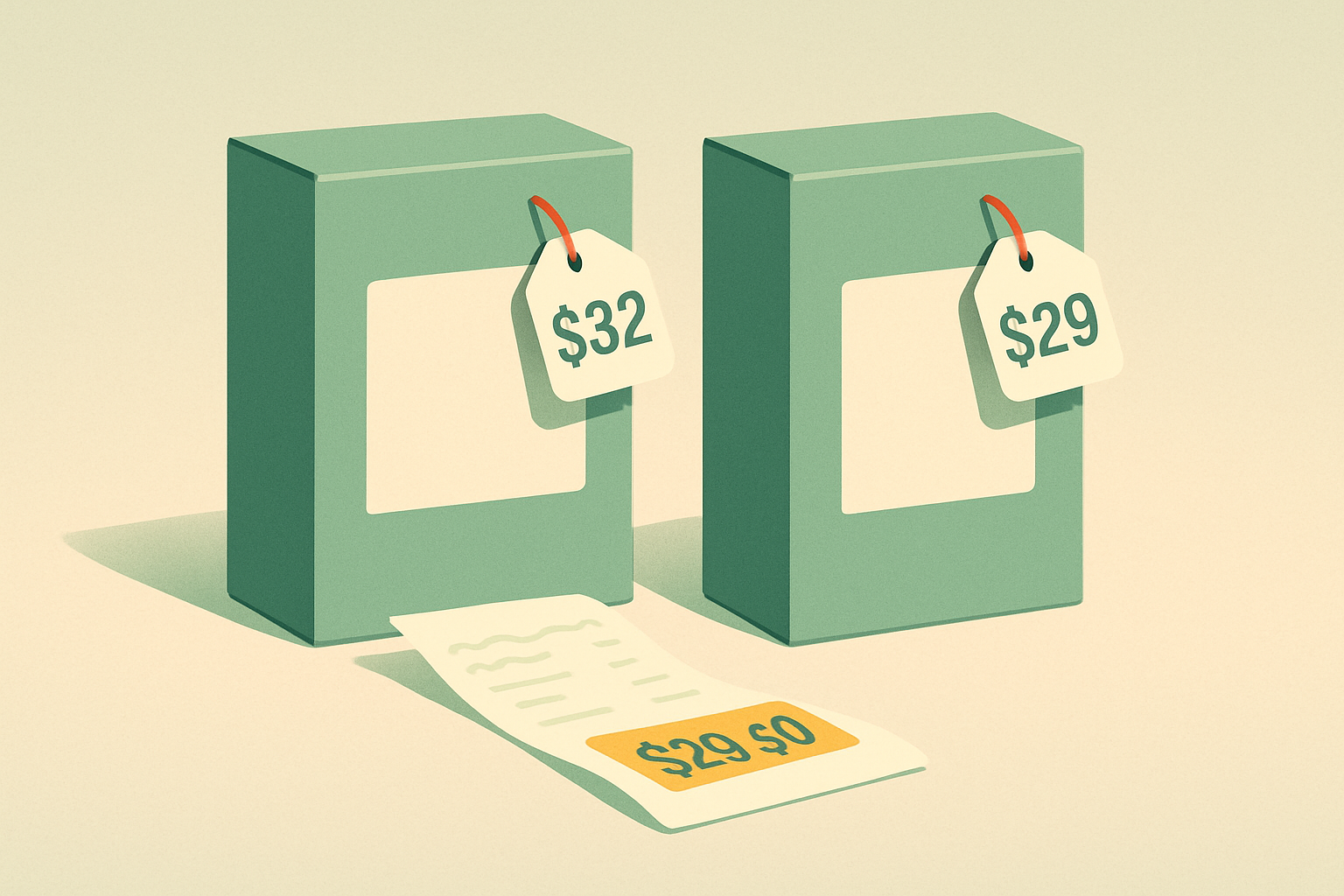
Price matching is when a store agrees to sell you an item at a lower price that a competitor is advertising — you show proof of the cheaper price, and the retailer matches it. It lets you shop where you prefer while still paying the lowest advertised price you can find.
It's a common policy across big-box stores, electronics retailers, pharmacies, and many online shops. The pitch is simple: "Found it cheaper somewhere else? We'll match it, so you don't have to go anywhere." That's a real convenience — but like most retail policies, the value lives in the details. Knowing how price matching actually works (and where it quietly falls short) is what turns it from a marketing line into money saved.
How price matching works
The basic mechanic is the same almost everywhere:
- You find the item cheaper at a qualifying competitor — usually an advertised, in-stock price.
- You show proof — a current ad, a screenshot, or the live listing — either at checkout or to customer service.
- The retailer matches it if your proof meets the conditions in their policy.
The key word is advertised. Price matching responds to a price a competitor is publicly offering, not to a deal you negotiated or a price you simply think is fair. The store is essentially saying, "We won't lose your sale over a price someone else is publishing."
Match, adjust, or beat — the three flavors
These terms get used loosely, but they're different things:
- Price match — the store matches a competitor's lower price at the time you buy.
- Price adjustment — the store matches its own lower price if the item drops shortly after you bought it, usually within a set window. You bring your receipt and get the difference back.
- Price beat — less common; the store goes slightly below a competitor's price to win the sale.
Price adjustment is the one shoppers forget about most. If you buy something and notice it goes on sale a week later at the same store, many retailers will refund the difference — but only if you ask within their window.
The fine print, where it gets tricky
Price matching sounds open-ended, but every policy is fenced in by conditions. Common ones:
- Identical item only. Same brand, model, size, color, and configuration. Close isn't enough.
- In stock at both stores. A sold-out "deal" usually doesn't qualify.
- Qualifying competitors only. Policies often exclude online marketplaces, third-party sellers, membership-only clubs, and out-of-region stores.
- Excluded deals. Clearance, open-box, refurbished, doorbusters, flash sales, coupon-stacked prices, and bundle offers are frequently off the table.
- Time windows. Price adjustments only count if you ask within a few days.
There's also a subtler catch worth knowing: store-exclusive model numbers. Manufacturers sometimes make slightly different versions of the same product — a TV or appliance with a unique model code sold only at one chain. When the model numbers don't match, the retailer can decline the match because, technically, it isn't the "identical item." This isn't always a trick, but it does make head-to-head comparison harder.
When price matching genuinely helps you
Used well, it's a real win:
- You get the low price at the store you actually like — for its return policy, location, loyalty rewards, or fast shipping.
- It saves a trip. No driving across town to chase a price you can simply bring with you.
- It removes buyer's hesitation. You can buy now instead of waiting, knowing you can match a lower price if you spot one.
- Price adjustment protects you after the fact, softening the sting of a sale that lands right after your purchase.
For big-ticket, identical items where you've already found a legitimate lower price, price matching is one of the most straightforward ways to save without overthinking it.
When it doesn't help — or quietly hurts
The flip side is just as real:
- The burden is on you. You have to find the proof, know the policy, and ask. Stores rarely volunteer it.
- Exclusions can swallow the deal. By the time you account for marketplaces, clearance, and model-number mismatches, the "lower price" may not qualify.
- It can create a false sense of "best deal." Matching one competitor's price feels like winning, but that price may not be the lowest available — and it ignores shipping, tax, coupons, cashback, returns, and warranty. A matched sticker price isn't the same as the lowest total cost.
- It anchors you to a store. The policy is designed to keep your sale in-house. That's fine when that store is genuinely your best option — and less fine when it nudges you to stop comparing.
None of this makes price matching bad. It's a tool with incentives baked in: it benefits you and the retailer who keeps your business. Understanding both sides is more useful than treating it as either a loophole or a trap.
How to use price matching like a pro
- Read the policy before you shop, especially the list of excluded sellers and deal types.
- Verify the exact model number matches — not just the product name.
- Keep dated proof: a screenshot showing price, seller, model, and the date.
- Compare total cost, not just the sticker — factor shipping, tax, and returns.
- Note the adjustment window and check back if you bought just before a likely sale.
- Don't let a successful match end your thinking. Ask, "Is this actually a good price, or just lower than one competitor?"
Where honest comparison fits in
Price matching is really about one question every shopper has: am I getting a fair price? That same question runs underneath a lot of pricing behavior — like why online prices change throughout the day, the gap between a listed price and what MSRP actually means, and the timeless dilemma of whether you should buy now or wait.
Shopi is built to answer that question for you, not to push a sale. We earn nothing when you buy — no affiliate links, no ads, no commissions — so there's no reason to steer you toward one store over another. Shopi learns what you actually need, explains the "why this is for you" behind every pick, and links you straight to the product page so you can decide. Try the no-signup demo to see it in action, or set up a free profile for recommendations tailored to you.
Frequently asked questions
What is price matching in simple terms?
Price matching is when a store agrees to sell you an item at a lower price a competitor is advertising. You show proof of the cheaper price — an ad, screenshot, or live listing — and if it meets the store's conditions, they match it. It lets you buy at your preferred store while paying the lowest advertised price.
What's the difference between price matching and price adjustment?
Price matching means the store matches a competitor's lower price at the time you buy. Price adjustment means the store matches its own lower price if the item drops shortly after you purchased it — you bring your receipt within a set window and get the difference back. Both save money; adjustment just applies after the sale.
Do stores have to honor price matching?
No. Price matching is a voluntary policy, not a legal requirement. Stores set their own rules and can decline if your request doesn't meet the conditions — for example, if the competitor isn't a qualifying seller, the item is out of stock, the deal is clearance, or the model numbers don't match exactly.
Does price matching always get me the best deal?
Not necessarily. It matches one competitor's advertised price, which may not be the lowest available. It also usually ignores shipping, tax, coupons, cashback, returns, and warranty. A matched sticker price isn't the same as the lowest total cost, so it's still worth comparing the full picture.
Why can't I match the price on some products?
Often it's because the item isn't truly identical. Manufacturers sometimes make store-exclusive versions with unique model numbers, so the same-looking product technically differs between retailers. Policies also commonly exclude marketplaces, third-party sellers, clearance, open-box, refurbished, and limited-time flash sales.