How to Choose an Electric Toothbrush
By The Shopi Team · 7 min read
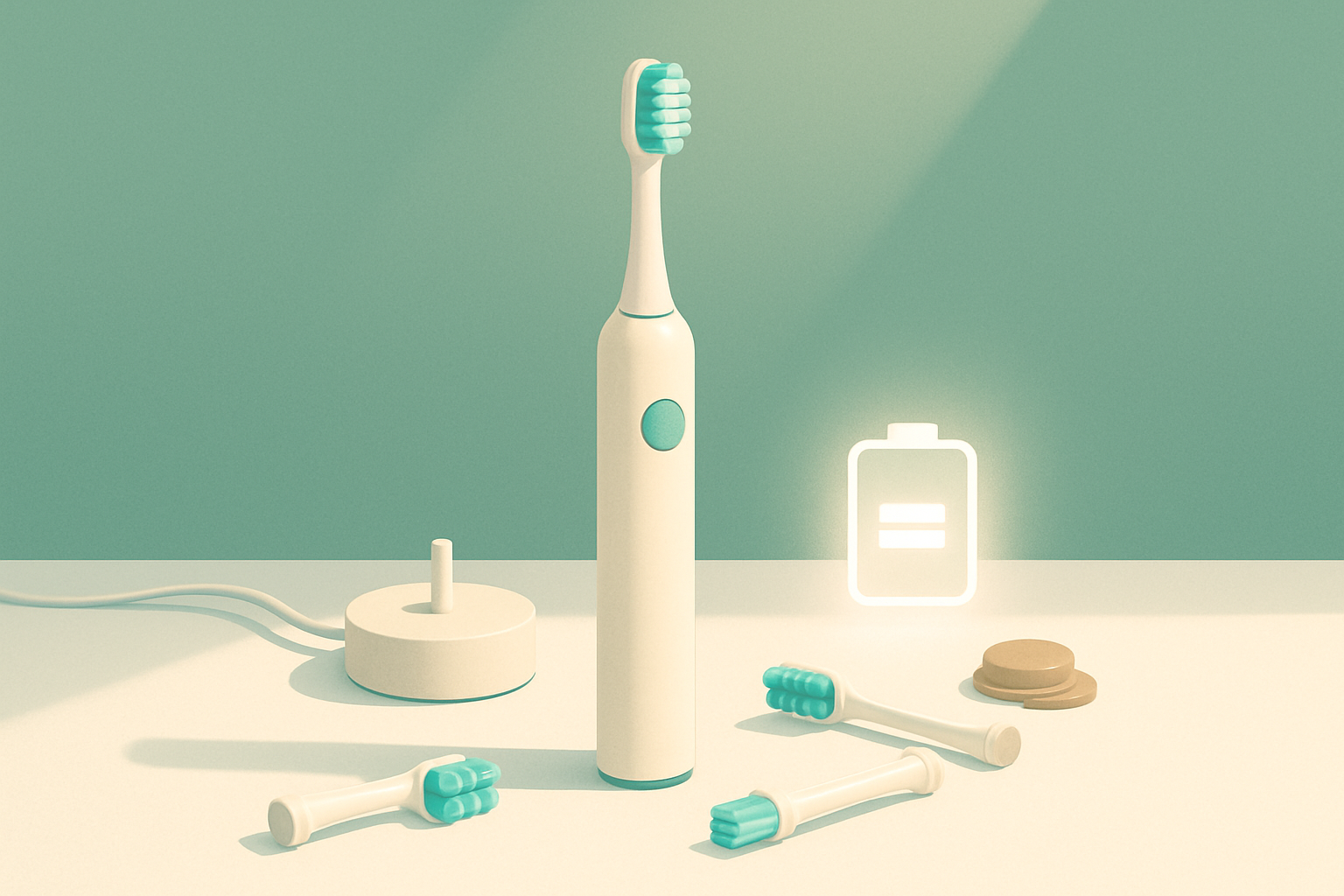
Working out how to choose an electric toothbrush sounds like it should take five minutes, but the moment you start looking you hit a wall of modes, sensors, app integrations, and price tags that swing from pocket change to more than a decent pair of shoes. Most of the "best electric toothbrush" lists you'll find are stuffed with affiliate links, so the "winner" often happens to be whichever model pays the reviewer the most. The reassuring part: the basics of brushing your teeth have not changed, and you only need to understand a handful of factors to buy well.
This guide covers what actually matters, the brush technology, the features worth paying for, the recurring cost everyone forgets, and how to match a brush to the person using it, so you can shop with a short checklist instead of a marketing brochure. No brand names, no affiliate links, just the decision framework.
Sonic or oscillating? It's mostly preference
Powered toothbrushes come in two main families, and brands market the difference like it's a rivalry. For most people it isn't.
- Oscillating-rotating brushes use a small round head that spins back and forth, often with a pulsing motion. The compact head wraps around one tooth at a time, which some people find easier for targeting individual teeth and along the gumline.
- Sonic (high-frequency vibrating) brushes use a longer head, like a manual brush, that vibrates very fast in a sweeping motion. The feel is closer to a regular toothbrush, and the rapid movement helps push fluid into the gaps between teeth.
Both clean well when used correctly. The honest answer to "which is better" is "the one you'll actually use properly, twice a day, for two minutes." If you can feel each in person, do, the sensation is noticeably different and people often have a strong preference once they've tried both.
One thing to steer around: cheap battery-operated brushes that take a disposable AA battery and buzz weakly. Those are barely a step up from a manual brush. A genuine powered brush is rechargeable and built around a stronger motor.
The features that matter, and the ones that don't
This is where you save money. Two features genuinely earn their keep:
- Pressure sensor. Brushing too hard wears enamel and pushes gums back over time, and almost everyone presses harder than they think. A sensor that warns you with a light or a buzz when you bear down is one of the few extras dental professionals consistently like.
- Two-minute timer. Most people brush for far less time than they believe. A built-in timer, ideally one that pulses every 30 seconds to nudge you to the next quarter of your mouth, quietly fixes that. It's cheap to include and worth having.
Then there's the stuff that mostly exists to justify a higher price:
- Multiple modes (whitening, gum care, sensitive, tongue clean). Most people use one, maybe two. A "sensitive" setting is nice if you need it; the rest are rarely touched.
- App and Bluetooth connectivity. Genuinely useful for getting kids to brush, or for the rare adult who loves tracking. Most people open the app a few times and then never again. Don't pay a premium for it unless you know you're that person.
- Screens and handle displays. Fun for a week. Not a cleaning upgrade.
Feature lists are designed to make models look different from each other. Stripping them back to "pressure sensor plus timer" makes comparison far easier. Our guide to comparing products objectively walks through a method for doing exactly that when every product page is shouting.
The cost everyone forgets: replacement heads
Here's the single biggest pitfall, and it's structural. An electric toothbrush is a razor-and-blades product: the handle is a one-time cost, but the replacement heads are forever. The common guidance is to swap a head roughly every three months, or sooner once the bristles splay out, and proprietary heads are not cheap.
Before you fall for a discounted handle, do the math on the part you'll keep buying:
- What does one replacement head actually cost, and how many come in a pack?
- How easy are they to find in everyday shops, not just one retailer's site?
- Are there reputable third-party heads that fit? Generic heads can save money, though quality varies and some makers warn it may affect the warranty.
- Multiply it out. A cheaper handle that uses pricey, hard-to-find heads can cost more over a few years than a dearer handle with affordable ones.
A bargain brush with a captive, expensive head supply isn't really a bargain. This is fundamentally a budgeting question; our guide to setting a shopping budget covers thinking in total cost of ownership rather than sticker price.
Match the brush to the person using it
The "right" brush depends entirely on who's holding it.
- Sensitive teeth or receding gums: prioritise a pressure sensor, a gentle or sensitive mode, and soft heads. The combination protects you from your own enthusiasm.
- Braces or other orthodontics: look for compatible orthodontic heads and a brush that's comfortable to manoeuvre around brackets and wires.
- Limited dexterity (arthritis, an injury, some disabilities): a powered brush genuinely helps, because the motor does the scrubbing. Favour a chunky, grippy handle and a simple button layout.
- Kids: smaller handles, softer bristles, gentler motors, and yes, this is the one case where the app gamification can earn its keep by turning brushing into a game.
- Frequent travellers: long battery life and a travel case, ideally one that can charge the brush, matter more than any extra mode.
Power, charging, and waterproofing
The unglamorous specs that quietly shape daily life:
- Battery life. A good rechargeable brush should run one to two weeks or more per charge. That's the number that matters if you travel, far more than the mode count.
- Charging method. Most use an inductive charging stand; some offer USB charging, which is handy on the road. Replaceable-battery models are best avoided for everyday use.
- Waterproofing. You'll use this in a wet bathroom, possibly the shower, so it should be fully water-resistant and easy to rinse clean. Most reputable rechargeable brushes are.
- Noise and feel. Hard to judge online and easy to dislike in person. If you can hold one before buying, take the chance.
Budget tiers, and where the returns dry up
Roughly speaking, powered brushes fall into three tiers, and it helps to know what each one actually buys you:
- Entry rechargeable: a timer, a basic clean mode, and sometimes a pressure sensor. Does the core job well.
- Mid-range: a reliable pressure sensor, a couple of genuinely useful modes, better battery life, and often a travel case. This is the sweet spot for most people.
- Premium: app connectivity, many modes, displays, and premium cases. You're mostly paying for features, not for cleaner teeth.
The key insight: the big leap in cleaning is from a manual brush to almost any decent powered one. The leap from mid-range to premium is mostly comfort and gadgetry. Spend where it changes the outcome, not where it changes the box. If you want a repeatable way to sort hype from substance, our guide to researching a product before buying lays out the approach.
A quick checklist before you buy
Before you click anything, answer these:
- Does it have a pressure sensor and a timer? (The two features worth caring about.)
- What do replacement heads cost, and are they easy to find?
- How long does the battery last per charge?
- Is it genuinely water-resistant?
- Who is it for, and do they have specific needs (sensitivity, braces, dexterity, a child)?
- Does it carry an independent quality mark like the ADA Seal of Acceptance, rather than just the brand's own claims?
If you can answer those six, you already know more than most of the "top pick" articles will tell you.
How Shopi fits in
This is the kind of decision where a tool with no stake in your choice helps. Shopi runs no affiliate links, no ads, and earns no commission when you buy, so it has no reason to steer you toward a pricier handle or a particular brand. Tell it what you care about, sensitivity, budget, travel, a kid who won't brush, and it learns your needs, budget, and values as you search, then explains every recommendation in plain language with a relevance score and links you straight to the product's own page. You can try a no-signup demo to see how it works, though it runs on a sample shopper profile, so the results aren't tailored to you until you create a free profile (a couple of minutes). After that, the picks are about your mouth and your budget, not someone else's commission, and you still make the final call.
Frequently asked questions
Are electric toothbrushes actually better than manual ones?
They can help many people clean more consistently, but the device matters less than your technique and brushing twice a day for two minutes. The real edge is practical: a built-in timer keeps you brushing long enough, and a pressure sensor stops you scrubbing too hard. A manual brush used well can beat a powered one used badly.
Sonic or oscillating, which type is better?
Neither wins outright. Oscillating-rotating brushes use a small round head that targets one tooth at a time; sonic brushes use a longer head that vibrates fast and feels closer to a manual brush. Both clean effectively when used correctly, so it comes down to which feels better in your mouth. If you can try each, do.
Which features are worth paying extra for?
A pressure sensor and a two-minute timer are the two that consistently earn their place. Extra brushing modes, app connectivity, and on-handle screens are mostly there to justify a higher price, useful for specific people like kids, trackers, or those with sensitive teeth, but skippable for most. Strip a model down to those two essentials when comparing.
How much do replacement heads cost, and how often should I replace them?
Prices vary a lot by brand, so check the per-head cost and whether they're easy to find before you buy, because this is the real long-term expense. The common guidance is to replace a head roughly every three months, or sooner once the bristles splay out. A cheap handle with expensive, hard-to-find heads can cost more over a few years than a pricier one with affordable heads.
Can an AI shopping tool tell me which electric toothbrush to buy?
It can narrow the field against your own criteria, budget, sensitivity, travel needs, a child who won't brush, without the affiliate incentive that shapes most 'best of' lists. What it can't do is feel the brush in your hand or replace your dentist's advice, and AI can make mistakes. Use it to surface options that fit you, then make the final call yourself.