Buying guides
How to Choose a Camera
By The Shopi Team · 8 min read
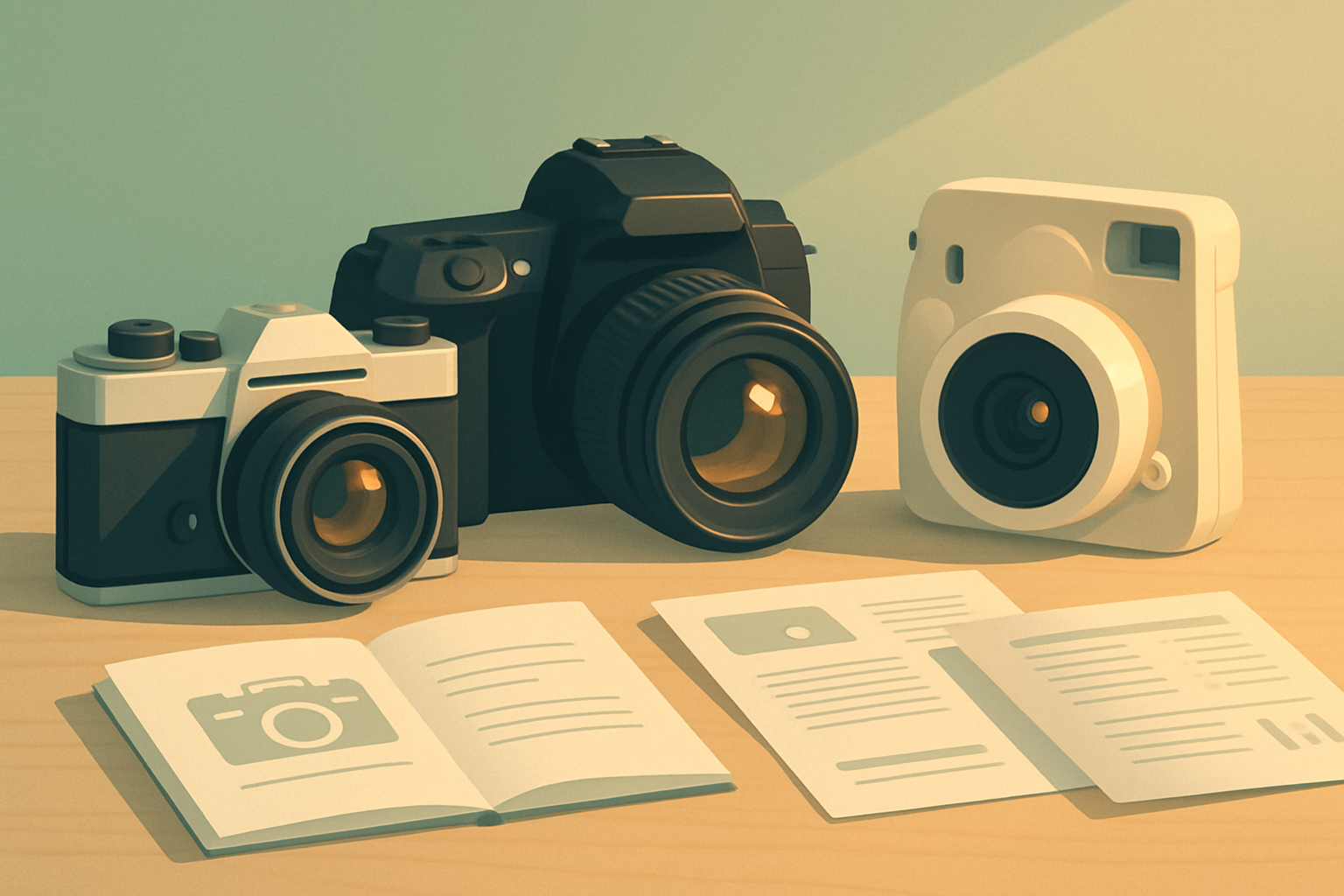
Camera marketing leans hard on one number — megapixels — and on the quiet promise that spending more automatically makes your photos better. Neither holds up. So the real question in how to choose a camera isn't "which one has the most megapixels?" It's "which camera will I actually carry, and does it suit the photos and videos I genuinely want to make?" Get that order right and the spec sheet stops being intimidating. Let's build a framework that ties the jargon back to what you shoot, how you'll carry it, and what you want to spend.
Start with what — and how — you'll shoot
Before a single spec, get honest about your real use, not your aspirational one:
- What will you photograph most? Travel and street scenes, family and pets, landscapes, sports and wildlife, video and vlogging, or a bit of everything. Each pulls toward different strengths.
- Where and how often? A camera that lives in a bag at home is worthless. Something light you'll actually bring beats a powerful body that stays on the shelf.
- How much do you want to learn? Some people love dials, manual control, and editing later. Others want to point, shoot, and share. There's a right camera for both — and buying the wrong end of that spectrum is a fast route to frustration.
Everything below maps back to these answers. The most common and expensive mistake is buying the camera that impressed you in a review for someone else's needs, rather than the one that fits how you shoot.
Pick the right type of camera for your life
"Camera" covers wildly different tools. Here's how the main types compare, in plain terms:
- Smartphone — the camera you always have. Computational tricks make it remarkably good for everyday and social shots. Limited by a tiny sensor and fixed lenses, but it handles the majority of casual moments better than people admit.
- Compact / point-and-shoot — pocketable and simple, with one built-in lens. Convenient for travel and everyday carry; image quality swings widely depending on the sensor inside.
- Bridge / superzoom — one body with an enormous built-in zoom range you can't swap out. Great reach for events or wildlife on a budget, with smaller sensors trading away some quality and low-light ability.
- Mirrorless (interchangeable lens) — the modern mainstream. Compact bodies, electronic viewfinders, strong autofocus and video, and a wide choice of lenses. The most future-proof path for most people who want room to grow.
- DSLR — older mirror-based design, still very capable. Optical viewfinder, long battery life, and a deep used-lens market often at lower prices. Bulkier, and most makers have shifted new development toward mirrorless.
- Action / 360 camera — tiny, rugged, and often waterproof, built for movement and point-of-view video. Not the tool for portraits or dim rooms.
There's no universal winner here — only fit. A frequent traveler who wants quality without heft leans one way; a parent shooting fast-moving kids leans another. Choose for your life, not the type that sounds most "serious."
The sensor matters more than the megapixels
If one idea saves you money, it's this: sensor size shapes image quality far more than megapixel count. A larger sensor gathers more light, which generally means cleaner results in dim conditions and more of that soft, blurred-background look people associate with "professional" photos.
Here's how the common sizes stack up:
- Full-frame — the largest common sensor. Best low-light headroom and the most control over background blur. The trade-off is bigger, heavier, pricier bodies and lenses.
- APS-C — a popular middle ground. Strong quality in a smaller, more affordable package. For many enthusiasts this is the sweet spot.
- Micro Four Thirds — smaller still, enabling genuinely compact bodies and lenses. Excellent for travel and video, with a bit less low-light cushion.
- 1-inch and smaller — found in premium compacts and bridge cameras. Convenient, but as the sensor shrinks, quality drifts toward smartphone territory.
And megapixels? Beyond a sensible point, more pixels mostly help if you crop aggressively or print very large. Extra megapixels mean larger files, and on a small sensor they can even work against low-light performance. Treat a high megapixel count as a feature to question, not a quality to trust.
You're buying a system, not just a body
This is the step beginners skip and later regret. With any interchangeable-lens camera, the lens shapes your photos as much as the body does, and you're committing to that brand's lens mount for years. A modest body with a good lens routinely outperforms an expensive body with a mediocre one.
Before you fall for a specific body, look at the system around it:
- How many lenses exist for this mount, and what do they cost? A cheap body trapped in a thin, expensive lens lineup is a poor long-term value.
- Are there affordable options for the focal lengths you'll actually use, or only premium ones?
- Will third-party and used lenses fit? A healthy used market can stretch your budget for years.
The bundled "kit lens" is a fine starting point, not the destination. Budget from day one for at least one lens that suits your subject — a bright prime for low light and portraits, or a versatile zoom for travel.
Decode the specs that actually matter
Once the type and system are settled, a handful of specs are worth your attention:
- Autofocus. Modern subject, eye, and animal detection with reliable tracking is a genuine difference-maker for kids, pets, and sports. If you mostly shoot still subjects like landscapes, you can prioritize it less.
- Image stabilization. In-body stabilization (and stabilized lenses) lets you shoot handheld in lower light and steadies video. Valuable if you shoot indoors, at dusk, or without a tripod.
- Video capability. If you'll shoot video, check resolution and frame-rate options, recording-time limits, a microphone input, and whether the body has overheating issues. If you only shoot stills, don't pay a premium for video features you'll never use.
- Viewfinder and screen. An electronic viewfinder helps enormously in bright sun where a rear screen washes out. A screen that tilts or flips is handy for low angles, overhead shots, and filming yourself.
- Burst speed. Frames per second matters for action and wildlife, where you're catching a fleeting moment. For everyday and travel shooting it's rarely the deciding factor.
Don't skip the boring stuff
Specs get the headlines, but these decide whether you'll still reach for the camera in year three:
- Size and weight. The best camera is the one you bring. A kit that's a chore to pack will lose to your phone every time.
- Handling and menus. Grip comfort, button layout, and menu logic vary a lot between brands. If you can, hold a few in person — what feels intuitive to one person annoys another.
- Battery life. Mirrorless cameras tend to drain faster than older DSLRs. Plan to carry a spare or two for a full day out.
- Storage and connectivity. Check the card type and speed it needs, whether it has one slot or two, and how easily it sends photos to your phone for sharing.
- Weather sealing. If you shoot outdoors, travel rough, or photograph in dust and drizzle, sealing is worth seeking out.
Common pitfalls and smart questions to ask
A few traps catch first-time buyers, and a few questions cut straight through them:
- Don't buy more camera than you'll carry or learn. A heavy, complex body that intimidates you produces fewer keepers than a simpler one you enjoy using.
- Don't fixate on the body and starve the lens. Split your budget so at least one good lens comes home with it.
- Used gear is legitimate — especially lenses, which age slowly and hold value. It's one of the smartest ways to stretch a budget.
- Ask: what does this lens system cost to grow into? The body is the entry fee; the lenses are the long-term bill.
- Ask: will I actually carry this? Be ruthlessly honest.
- Read across multiple independent sources and look at real sample images at full size, not just spec comparisons. A camera's "feel" comes through in pictures, not paragraphs.
How Shopi helps you choose
Here's the part most guides skip. Once you know your subjects, your system, and how much you'll carry, the hard part isn't the decision — it's the noise. Plenty of "best camera" roundups are ranked partly by affiliate commission: the site earns a cut when you buy through its link, which can quietly nudge certain models up the list. That doesn't make them worthless, but it's an incentive worth reading around. Our guides on how to research a product before buying and how to compare products objectively help you score options on your criteria instead of someone else's spotlight.
When you're ready to look at real cameras, this is candidly why we built Shopi: an AI shopping advisor with no affiliate links, no ads, and no commissions — it earns nothing when you buy, so a recommendation rises only because it fits you. It learns your needs, budget, and values, then explains every pick in plain language with a relevance score, and links you straight to the product's own page rather than a kickback link. You can tell it something like "lightweight mirrorless for travel, good in low light, under [your budget]" and see options with a clear "why this fits" for each.
You can try it free with no signup — the demo runs on a sample shopper profile, so it shows how the reasoning works rather than results tailored to you. Create a free profile (under two minutes) when you want recommendations matched to your own subjects and budget. The framework above is the real value, and it's yours whether or not you ever open the app: shoot first in your head, match the type to your life, weigh sensor and lenses over megapixels, and ignore anyone selling you a number you'll never see in a photo.
Frequently asked questions
What is the most important thing to get right when choosing a camera?
What and how you'll actually shoot — before any spec. Your subjects (travel, family, sports, video) decide which strengths matter, and your willingness to carry and learn the camera decides the type. A light camera you bring everywhere beats a powerful one that stays home. Match the camera to that reality and most spec decisions answer themselves.
Do more megapixels mean better photos?
Not really. Beyond a sensible point, extra megapixels mostly help only if you crop heavily or print very large, and they create bigger files — on a small sensor they can even hurt low-light performance. Sensor size and lens quality shape the look of a photo far more than the megapixel count, so treat a big number on the box as a feature to question, not trust.
What's the difference between full-frame, APS-C, and Micro Four Thirds sensors?
They're different sensor sizes with different trade-offs. Full-frame is the largest common sensor, with the best low-light ability and background blur, but it means bigger, pricier bodies and lenses. APS-C is a popular middle ground — strong quality in a smaller, more affordable package. Micro Four Thirds is smaller still, enabling very compact, travel-friendly kits with slightly less low-light headroom. There's no single winner; the right size depends on your priorities and budget.
Is the camera body or the lens more important?
For interchangeable-lens cameras, the lens shapes your photos as much as the body, and you're committing to that brand's lens mount for years. A modest body with a good lens often beats an expensive body with a weak one. Before choosing a body, check how many lenses exist for its mount, what they cost, and whether affordable and used options are available for the focal lengths you'll use.
How does Shopi help me choose a camera differently?
Shopi is an AI shopping advisor with no affiliate links, ads, or commissions, so it earns nothing when you buy and recommends based on fit, not payouts. You describe your subjects, budget, and how you shoot, and it returns options with a plain-English 'why this fits' explanation and a relevance score, linking you directly to each product's own page. You can try a free demo with no signup (it runs on a sample profile, so it isn't tailored to you), or create a free profile for personalized results.