How Your Shopping Data Gets Collected (and Used)
By The Shopi Team · 6 min read
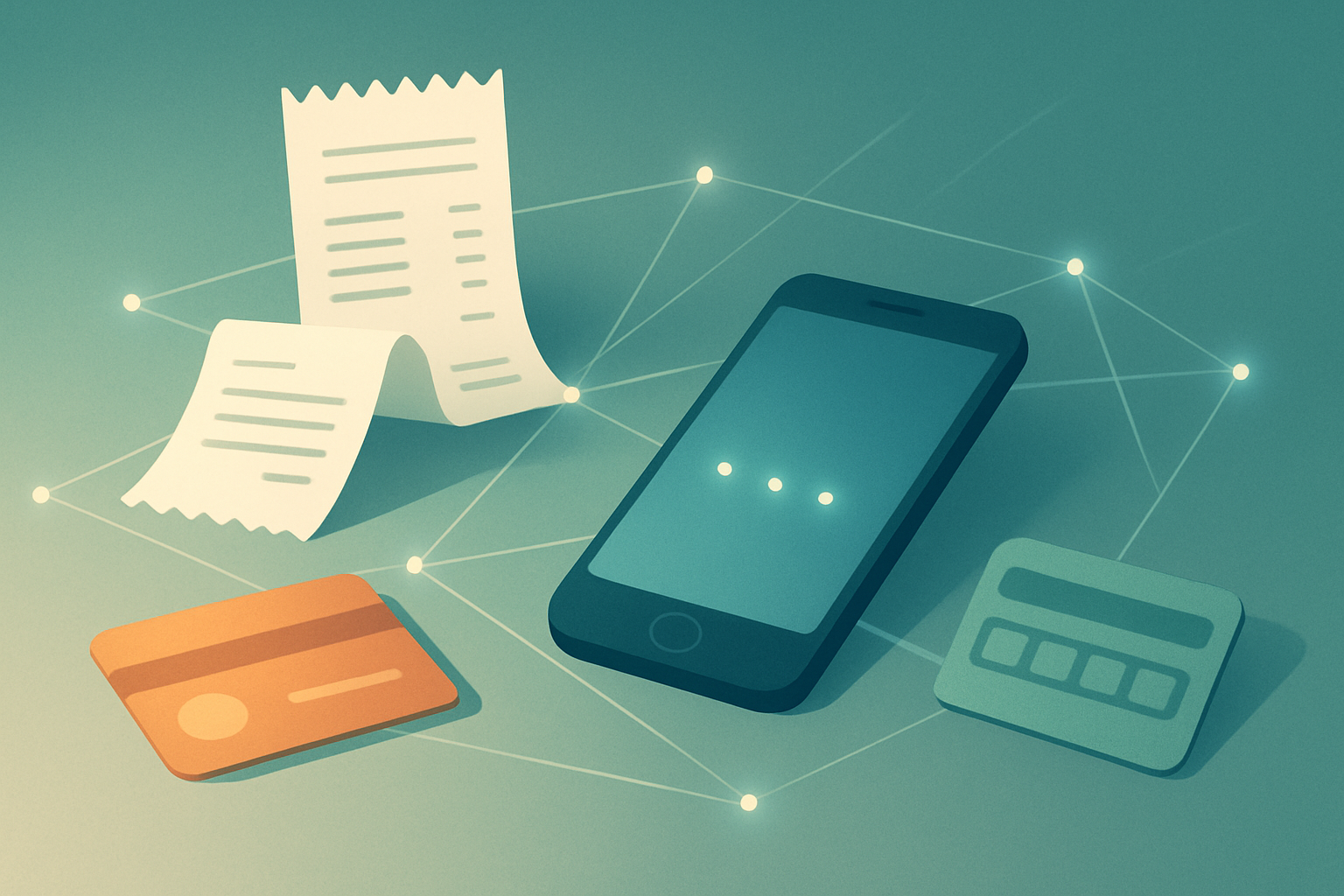
If you've ever asked "how is my shopping data collected," the honest answer is: constantly, quietly, and from far more places than the store you're actually buying from. Every search, tap, hover, and abandoned cart can become a data point. Some of it you knowingly hand over — your email, your address, a loyalty card number. A lot more gets gathered in the background by code you never see.
None of this is automatically sinister. But it's worth understanding, because the data you generate while shopping shapes the prices you're shown, the ads that trail you around the web, and the products that get recommended to you. Here's a plain-English tour of where it comes from, where it goes, and what you can actually do about it.
How is my shopping data collected? Three kinds of data
Broadly, your shopping data falls into three buckets — what you hand over on purpose, what's captured automatically, and what's inferred from both.
- Volunteered data — name, email, shipping address, payment details, reviews you write, items you wish-list or save.
- Observed data — what you click, how long you linger on a product, what you put in a cart and abandon, your device and browser, your approximate location, the path you take across different sites.
- Inferred data — the conclusions companies draw from the first two: your likely budget, your life stage, which brands you favor, whether you're a "wait-for-a-sale" type or an impulse buyer.
That third bucket surprises people most. You never typed "training for a marathon" or "moving house," but a pattern of purchases can let a system make a confident guess.
Cookies and pixels: the quiet collectors
Most automatic collection runs on two unglamorous technologies.
Cookies are small files a site stores in your browser. First-party cookies are set by the site you're actually visiting and do useful things — keeping you logged in, remembering your cart. Third-party cookies are set by other companies (usually ad networks) embedded in the page, and they're the ones that follow you from site to site.
Tracking pixels (sometimes called web beacons) are invisible snippets of code baked into web pages and emails. When the pixel loads, it quietly reports back: you opened this email, you viewed this product, you reached the checkout. Retailers add ad-network pixels to their sites so those networks can recognize you later — which is the machinery behind ads chasing you for shoes you glanced at once. If that experience drives you a little crazy, we unpack it in why ads follow me around the internet.
The data you hand over: accounts, apps, and loyalty programs
Not all collection is sneaky. A lot of it is a trade you agree to — sometimes without reading the fine print.
Accounts tie your activity to a real identity. The moment you log in, scattered, anonymous behavior becomes a tidy, connected purchase history.
Mobile apps often reach further than a website can — location, contacts, notifications, sometimes device identifiers used for ad tracking. Convenient, but a wider funnel.
Loyalty programs are arguably the most honest deal of the bunch, even if it's rarely framed that way: you swap detailed purchase history for discounts and points. The store learns exactly what you buy, how often, and the price at which you finally bite. That's not a scandal — it's the actual product you're enrolling in. The only mistake is not realizing it.
Where your shopping data actually goes
This is the part that's genuinely hard to see from the outside.
- The retailer keeps it to personalize your experience, set prices, and market to you later.
- Ad networks and platforms receive signals (often via those pixels) so they can target ads across the web and inside apps.
- Data brokers can aggregate information from many sources into detailed profiles, which get bought and sold — frequently without you ever knowing a given broker exists.
- AI shopping tools are the newest collectors. In the 2025 holiday season, roughly 56% of US shoppers used generative AI while shopping, a sharp jump from the year before — and many of those tools learn from what you ask them, which is its own kind of data trail.
It's also worth knowing the business model underneath. When OpenAI added shopping features to ChatGPT in late 2025, its Instant Checkout reportedly charges merchants around 4% on a sale. That doesn't make a tool bad — but whenever money changes hands on a purchase, it's fair to ask whether incentives are quietly shaping what you're shown. There's a real difference between help that's personalized for you and help that's targeted at you, and we draw that line in personalized vs. targeted shopping.
How to shrink your data footprint
You can't make shopping data collection vanish, but you can meaningfully reduce it. A few quick wins:
- Tighten your browser. Block third-party cookies, and consider a privacy-focused browser or extension. Privacy-focused search engines don't build an ad profile on you.
- Be deliberate about accounts and apps. Guest checkout, a dedicated shopping email, and declining app permissions you don't genuinely need all help.
- Use the controls you already have. Most ad systems offer an opt-out, and your phone lets you limit app tracking and reset your advertising ID.
- Know your rights. Privacy laws increasingly let you ask a company what it holds and request deletion — and if a service makes that hard, treat it as a signal.
If you want to go further, we've got step-by-step guides on shopping online more privately and deleting the data companies already hold.
A different model: help that isn't built on harvesting you
It's easy to assume good recommendations require surveillance. They don't. The collection exists because someone profits from it — through ads, affiliate commissions, or selling data onward.
That assumption is the one we built Shopi to challenge. Shopi learns your taste, budget, and values from how you search, save, and chat — but it runs no ads, no affiliate links, and no commissions, and it never sells or shares your data. You can view, edit, or delete your profile whenever you want. Every recommendation comes with a plain "why this is for you" explanation and a relevance score, so you can judge the reasoning instead of trusting a black box. And we're honest that our AI can still get things wrong — when it does, you can see why and correct it. (More on the model behind that in why Shopi is different and who we are.)
You don't have to take any of this on faith. You can try Shopi without signing up — the demo runs on a sample shopper profile, so it shows how the recommendations work rather than reading your mind. If you like it, a free profile takes under two minutes and makes the results actually yours. No card, no catch, and your data stays yours.
Frequently asked questions
Is it legal for companies to collect my shopping data?
In most places, yes — collecting shopping data is generally legal as long as a company discloses it, usually in a privacy policy you agree to. What's changing is your rights around it: many regions now require companies to tell you what they hold and to delete it on request. The legality isn't usually the issue; the lack of visibility is.
What's the difference between first-party and third-party cookies?
First-party cookies are set by the site you're actually visiting and handle useful tasks like keeping you logged in or remembering your cart. Third-party cookies are placed by other companies (typically ad networks) embedded in the page, and they're the ones that let advertisers recognize and follow you across different sites.
Can I completely stop my shopping data from being collected?
Not entirely — some collection is built into how websites and payments work. But you can shrink it a lot: block third-party cookies, use a privacy-focused browser and search engine, limit app permissions, use guest checkout, and exercise your right to opt out or request deletion where laws allow.
Do AI shopping assistants collect more data than regular stores?
It depends on the tool. Many AI shopping assistants learn from what you ask and search, which can be more revealing than a single purchase. The key question is the business model: tools funded by ads, commissions, or data sales have an incentive to gather and monetize your behavior, while subscription-only or privacy-first tools generally don't.
How do I delete the shopping data a company already has?
Look for a privacy or data-request option in your account settings, or email the company's privacy contact and ask for access and deletion. Privacy laws in many regions require them to honor reasonable requests. If a service makes deletion hard to find or refuses, that's a meaningful signal about how it treats your data.